Lux Aeterna
  • Home
  • How to Play
  • Setting
    • AfterLight
    • Belhaven
  • Character Creation
    • Species
    • Backgrounds
    • Assets
    • Features
    • Foils
    • Class >
      • The Berserker
      • The Cantor
      • The Dread
      • The Engineer
      • The Esper
      • The Exorcist
      • The Hallowed
      • The Hunter
      • The Magus
      • The Monk
      • The Occultist
      • The Sage
      • The Scoundrel
      • The Verdant
      • The Warrior
  • Adventure
    • Arms and Equipment

BelHaven

 
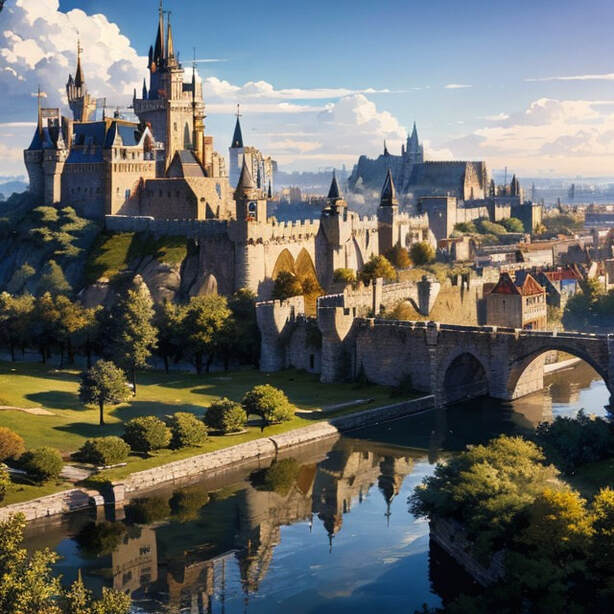
Amidst the deprivation and ruin of the current age, the fire of civilization still burns bright in small pockets of hope throughout the world. This is the story of one such place, the city-state of Belhaven. According to the city's meticulously kept histories, Belhaven was founded around 300 years ago by a diverse group of settlers who had previously lived as nomads, roaming the post-apocalyptic wasteland. Upon discovering the site that would eventually become Belhaven, the group set up fortifications and began building permanent settlements atop the ruins of an ancient city. The location was ideal; placed beside the great river Bel Abris, the settlers found their new home already fortified against roving bands of Hellbeasts, thanks to the impregnable walls of that ancient city upon which Belhaven would eventually be built. Not only was the settlement defensible, but the land was arable, abundant in resources, and nestled in the heart of a fertile valley that could provide all the city would need for generations to come.
Over time, Belhaven has grown to accommodate a population of nearly a million souls (as of the latest census) in an area that is a little over a hundred square miles. Other than a handful of well-hidden and well-fortified outposts, there are no permanent settlements outside the city walls - the roving bands of Hellbeasts make short work of anyone who dares linger too longer outside the city's fortifications. Belhaven is laid out like a wheel, with three concentric circles comprising its outer, inner, and central walls. The city is further sub-divided by two great inner walls which run north to south and east to west through the entire length of the city, like four spokes from the central axis. Thus, the city is divided into twelve Boroughs, sub-sections of the city partitioned by the architecture of Belhaven's walls; four in each of Belhavens three concentric rings. Each Borough has its own history, culture, spirit, and reputation.
​
Picture
The Pale (Outer Ring), clockwise: ​Pridwen, Harrow, Riven, Arx
The Oppidum (Inner Ring), clockwise: Oldemere, Athanos, Prospera, Tretagar
The Axis (Central Ring), clockwise: Eorling, Palladia, Moroque, Concordia

THe City-State of Belhaven

Picture
The City of Belhaven
  • The Pale
  • The Oppidum
  • The Axis
The History of Belhaven
Demographics
The Powers That Be
  • Guilds
  • Genii Locorum
Daily Life
  • Life and Times
  • Law
  • Crime
  • Economy
  • Politics
  • Education
  • Recreation
  • Food
  • Religion
  • Calendar
Picture

The Pale (The Outer Ring)

 
​Belhaven's outermost ring is called The Pale. The largest of the three rings, The Pale is nestled closest to the towering outer walls of the city. No matter where one sets foot in The Pale, the atmosphere is thick with a pervasive air of poverty and fear. Its predominantly poor residents live in cramped quarters, often lacking food, clothing, and basic necessities. While the outer walls provide some semblance of safety, the denizens of The Pale are the closest to the looming threat of the Hellbeasts who roam the wilderness outside Belhaven. Should such monstrosities ever breach the city's defenses, the citzens of The Pale are first in the line of fire. The constant vigilance required for survival here fills The Pale with an air of desperation as its residents struggle against the economic hardships imposed by Belhaven's palpable class divide. The lack of resources and opportunities further entrenches the cycle of poverty here, casting a shadow over the lives and futures of all who call The Pale home.

Within The Pale, one will find the Boroughs of Arx, Harrow, Riven, and Pridwen. 
Picture
Abutting the foothills near Mount Thelisor, wherein there are rich veins of copper and Lux, the borough of Arx is home to a hard-working population of miners and manual laborers who work tirelessly to dig these precious minerals from the earth. Great cables line the skies above Arx, transporting ore from the mines to the refineries of Tretagar.
Picture
The course of the mighty river, Bel Abris, runs through several of Belhaven's outer districts, but splits the entire borough of Riven in twain. Great bridges connect the two halves of Riven and a great many ports, warehouses, and shipwrights work to facilitate the city's river trade with other city-states built alongside Bel Abris's flow.
Picture
Once known as Syner's Walk, the so-called "Lost District" of Harrow was invaded by Hellbeasts who managed to breach the borough's walls three years ago. Despite the majority of the beasts being slain, some still lurk in the deep shadows of the city's poorest and most dangerous district as tragedy and darkness still hang heavy in the air.
Picture
At the gates of the city lies the borough of Pridwen, shield against all outside threats. Here, the legions of the city watch, the rangers of the Lodestar League, and the mercenaries of the 99th Legion watch and train relentlessly in defense of Belhaven. The borough is home to a number of prominent forts, towers, and battlements.
Picture

The Oppidum (The Inner Ring)

 
The Oppidum, with its markets, factories, forges, and banks stands as a testament to industriousness and hard work of Belhaven's people. The cobblestone streets of The Oppidum's boroughs pulse with the ceaseless activity of a working-class populace, as artisans, laborers, and merchants weave a vibrant tapestry of industrious daily life. The constant hum of electricity and the buzz of productivity fills the air, with workshops, markets, and warehouses brimming with the energy of a community dedicated to not only to survival, but to progress. Belhaven's tenacious middle class thrives in The Oppidum, embodying a relentless work ethic and determination to ascend the social ladder. Life in the city's inner ring is marked by a perpetual hustle and bustle, where citizens find purpose in their daily toils and collective efforts to drive their respective boroughs to prosperity. Amidst the rhythmic cadence of the hammer and anvil, the citizens of The Oppidum forge a community bound by shared aspirations and an unyielding commitment to the pursuit of success.
​
Within The Oppidum, one will find the Boroughs of Prospera, Tretagar, Athanos, and Oldemere.
Picture
The vibrant trade district of Prospera drives the economic engine of Belhaven. Bustling with markets, banks, and trade consortiums, Prospera is always buzzing with the hum of financial vitality. Home to the Belhaven Mint, where Lux is refined into coins for exchange, Prospera is the beating heart that drives the flow of currency through the city.
Picture
The air of this borough is filled with the caustic smell of smoke, the hum of machinery, the bang of hammers on anvils. As the industrial center of the city, Tretagar is home to smiths, artisans, and a veritable army of working-class laborers who staff its many factories, forges, and refineries.
Picture
In fair Athanos, the culture of Belhaven flourishes. Home to a number of theatres, museums, and conclaves of artists, Athanos is a haven for the arts and creatives of all sorts. The borough is also the location of an enormous coliseum which hosts everything from gladiatorial fights to sporting events to concerts to public forums, bringing people from all walks of life to the streets of Athanos.
Picture
Oldemere was the first borough built upon the ruins of that ancient site which would one day become Belhaven. As such, it is the oldest of the boroughs and home to many historical sites, including the city's original seat of government and the founders homes. A district steeped in mystique, it harbors secrets beneath its ancient foundations, ghosts of the past lurking in the shadows of its cobblestone streets and dim alleys.
Picture

The Axis (The Central Ring)

 
A bastion of opulence within Belhaven, The Axis sits at the very center of the city, cradling society's wealthy and cultured elite in its elegant embrace. Manors adorned with ivy-covered facades, sprawling gardens bathed in the golden glow of prosperity, and grand cathedrals that whisper tales of divine favor define this borough. The air itself seems to shimmer with diamond affluence as the aristocracy indulges in lives of luxury, perched high in the literal ivory towers that grant them a detached perspective on the struggles beyond their gilded gates. Here, the denizens of The Axis revel in lavish parties, opulent amenities, and all the finer things in life, right at their fingertips. As the privileged inhabitants navigate the labyrinth of upper-class social intricacies, they remain blissfully removed from many of the tumultuous realities faced by those residing in the less fortunate corners of Belhaven. However, life in The Axis is not without risk, as those who navigate the complex social landscape must contend with spies, assassins, and those who would control them from the shadows.

Within The Axis, one will find the Boroughs of Concordia, Moroque, Eorling, and Palladia
Picture
As the seat of Belhaven's government, Concordia is home to many powerful and influential figures within the city as well as several ornate gold and marble buildings wherein the laws of the land are debated and written by the regal Senate, while the Judicate interprets the law and arbitrates the courts even as the Spokesmen of Karst Hall handle day to day matters.
Picture
The resplendent gem of Belhaven, the opulent tapestry of grandeur and grace. Strolling Moroque feels like traversing a living canvas adorned with lush manor homes, elaborate palaces, and meticulously cultivated gardens. Grand museums hold records of the past and banquet halls resonate with the laughter and mirth of the city's elite.
Picture
With its towering monuments and solemn memorials, Eorling stands in testament to Belhaven's historical legacy. Founder's Park is a vast green space adorned with statues that pay homage to the lives and stories of the city's founders. The borough is a gorgeous and stately tribute to the undying spirit of the city, where echoes of the past sound into the present.
Picture
The light of the divine shines through the grand cathedrals and stained glass panoramas of Palladia where towering spires touch the heavens. Here, the Aventist Church holds both political and spiritual dominion. The fervent prayers and hymns of the faithful resound through the hallowed halls of this borough, consecrating its streets and lanes as the city's most sacred space.

The History of Belhaven

 
Belhaven sits upon the ruins of an ancient city, whose origins and history are lost to the ravages of time and the apocalypse. The foundations of the city's strongest walls and most prestigious buildings are of unknown make, yet remain peerless in their strength and beauty despite their age. There are vast, complex machines beneath the city, many of which have been repaired or repurposed to serve the citizens of Belhaven, providing much of the city with plumbing and electricity.

Yet beneath all of Belhaven's seeming success and prosperity, there is a cost, often paid in blood by those who came before. The relentless attacks of the Hellbeasts, political turmoil and bloodshed, and the scarcity of vital resources have all written their scars upon the pages of Belhaven's three centuries of history.
​

The Founding

More than three hundred years ago, a rag-tag band of settlers first came to the foothills of Mount Thelisor, where Bel Abris bends southward. Here they found the ruins of an ancient city, whose walls still stood strong even as time wore down all else around them. The settlers took shelter here, and finding the land around them rich in food, resources, and wild game, began building permanent settlements upon the ruined foundations of that ancient place.
When first the Hellbeasts fell upon the city gates, the founders fought back. The venerable walls of the old city were such that no defender fell prey to the hunger of the Hellbeasts and the enemy's attack was eventually turned away; a victory previously unknown by these settlers. And so it was decided that a home should be made here, a dwelling of light and rest in a dark and weary world.
The Borough of Oldemere was settled first, hidden behind both the inner and outer walls of the city. As the population grew, so too did their ambitions. It was not long before settlers built homes, businesses, parks, theatres, and places of worship for the city's growing populace. Curious explorers plumbed the depths of the ruined city's secrets, uncovering the machines that lay buried beneath, machines which would eventually come to provide power and plumbing by way of engines driven by Lux, a resource available in the nearby foothills.
Belhaven grew into a thriving metropolis as the years wore on, and it was not long before the city's twelve Boroughs were settled and populated. With the growth of Belhaven came the need for law and order. The City Watch were established, and with them the first order of Rangers to explore and keep watch over the wilderness around Belhaven. The Senate, The Magistrate, and The Mayor's Office all rose to power in these days, penning and enforcing the city's first laws.
​

The Siege of Belhaven

Unbeknownst to the founders of Belhaven, the nearby city-state of Arborleight had been growing steadily for the past forty years. Without the benefit of walls or ancient defenses, the Arborlineans had grown familiar with bloodshed, well-versed in the art of war as they fought daily for what could be grown or gathered from the land. When Arborleight's scouts made first contact with Belhaven, they returned to their leaders with stories of a growing city rich in resources, peopled by a folk unaccustomed to conflict. The Arborlineans soon raised up an army and placed Belhaven under siege.

The Founders

The original settlers of Belhaven were led (unofficially but undeniably) by a small group of individuals whose legends have grown in the telling since the city's inception. Tales of their epic adventures and heroic deeds are still told with a wry grin and an acknowledgement that these stories are probably little more than tall tales...though some parts just might be true.

The founders were led by a bold, decisive man named Jaobi Karst (often referred to as just Karst). Karst's on-again, off-again partner was a woman named Vaniah Hildred, a fierce warrior with legends of her own. Their son Bel grew up to become the city's first official mayor and the man whom "Bel's Haven" was named after.

Picture
Statue of Karst as seen in Founder's Park, in the Borough of Eorling.
Other famous founders were Melgileth Hermia, a healer of unrivaled talent who, in her later years, founded the Alcurist's College with a mission to understand and cure every disease. Syner, a brusque and mysterious loner, was the group's scout who discovered not only the site where Belhaven now stands, but explored many other important points of interest around the city. Many of his maps remain in use today and all who take on the esteemed mantle of Ranger are inheritors of his legacy.

Boas Tretagar was a smith of incredible skill, a human who earned the respect of the local Elves and learned their secret techniques for shaping Lux and unlocking its Mysteries. Fane Athanos was a bard, a historian, and a preserver of the arts and culture who established several orders of scribes and storytellers to preserve the records of the past and allow Belhaven's art and culture to flourish into the future. 
For six long years, the armies of Arborleight surrounded Belhaven, forcing its people to grow in resilience and skill at arms. The siege was only broken when Arborleight's armies were set upon by a horde of Hellbeasts, led by some of the most powerful and dreadful monstrosities ever known in this part of the world. It was only when the two cities joined forces against the darkness that the threat was ended and a treaty of peace was signed. Ever since, Belhaven and Arborleight have had an uneasy peace, predicated on a mutual understanding that if either city is to survive, there must be unity against the forces of chaos which would see all light swallowed in darkness.
​

Historical Reckoning

The historians of Belhaven count recorded history from the time of Belhaven's founding as no other records are available to them. Years are written as "Anno" followed by the Age and the year following the founding of Belhaven. The current year is Anno 2305 (2 for the Second Age of the world, and this being the 305th year since the founding of Belhaven).

Slavery in Belhaven

It should be noted that at this time, a large and growing population of enslaved peoples were employed in the mining and refinement of Lux, the lifeblood of the city's commerce and industry, not to mention the lone source of fuel for its utilities grid. Originally, this slave population was taken from local Elves who had been captured and forced to labor under duress as their inborn resistance to the Glow of Lux made them ideal candidates for such work. 
At first this practice was seen as an immoral but unfortunate necessity, since humanity was unable to long withstand Lux's Glow and the religious beliefs of the Elves regarding Lux made them unwilling to participate in its exploitation. Cries for reform were ignored until the plight of Belhaven's enslaved people became tolerated and then, eventually, ignored altogether.
To further compound matters, a controversial ruling by The Senate made it legal to commute the sentence of prisoners by forcing them into labor. At first, only those convicted of murder or other heinous crimes were forced to work with Lux as a death sentence. But as the city grew in its desire for the power and prosperity offered by Lux, the provisions and protections for criminals waned until anyone (minorities in particular) arrested for even minor offenses was in danger of laboring as a slave beneath the heavy yoke of Belhaven's insatiable hunger for Lux.

Fires of Injustice

Soon after the end of the war with Arborleight, many new folk began immigrating into Belhaven. Though a small number of Elves and Saurians had always lived among Belhaven's original founders, they were always a minority amongst the myriad of humanity who made up the bulk of the city's population. Thanks in part to Belhaven's proximity to Arborleight and its growing relationships with other far-off city-states, a variety of outsiders began immigrating to Belhaven en masse. Wary of outsiders coming off the heels of their recent invasion, nativist attitudes took root among Belhaven's human population. Those descended from the city's original inhabitants thought themselves superior to those immigrating to the city for safety and new opportunities, and even more wary of the outside perspectives and new cultural deviations they brought with them.

Picture
The Great Fire of Belhaven burned over half of the city to ash

As these things often happen, one small spark set in motion a great catastrophy and a devastating conflagration raged through the city, burning over half of Belhaven's buildings to the ground. In the wake of the disaster, anti-immigrant sentiments came to a head as the fire was (wrongly) rumored to have started amongst the densely packed and poorly built slums of the city, and thus blamed on non-human immigrants. This was a dark and shameful time in Belhaven's history, when oppressive laws against non-humans were set in place, forcing them to live in squalor, poverty, and obeisance to the city's human majority. Robberies and murders of non-humans were commonplace and seldom investigated by the City Watch. Non-humans were not allowed to vote or hold any position of authority in government. All it took was one report from a human to the Magistrates of the city for a non-human to be jailed, pending a lengthy investigation, where they would likely labor in slavery as part of their incarceration.
​
Picture
Led by Aras Qandris, rebels storm the old capital of Belhaven

Revolution and Reform

In Anno 2190, revolution swept through Belhaven. What began as a revolt among the city's enslaved peoples soon grew into a civil war between the wealthy and powerful elites, and the common people who found more and more of their freedoms and prosperity slipping away as the years wore on and the gap between rich and poor grew ever greater. Led by the famed (or infamous, depending on which side of the war you were on) Aras Qandris, an enslaved Elf who rose to prominence thanks to his skill in leadership, oration, and battle. Aras's rebels consisted not only of Elves, but of Saurians and Humans who sought equality and victory against the entrenched, ignoble powers of Belhaven. For two long, tumultuous years the city was at war with itself. But the rebels finally arose victorious after the siege and destruction of the city's former capital building in Oldemere, and the public execution of the corrupt, treasonous nobility who had put their own interests ahead of the life and liberty of Belhaven's people.

When the dust had settled and the fires of revolution had dwindled to smoldering embers, a new order emerged, one truer to Belhaven's founding principles of acceptance, the believe that anyone with the strength to contribute to the city's flourishing could do so, no matter their origin or birth. The city's new leadership annulled its oppressive rulings against non-humans and disbanded the fundamentally flawed Magistrate, which had allowed for great injustices to take place under the law. The Magistrate was replaced by The Judicate, a system of elected judges whose powers to interpret laws and pass sentences were greatly reigned in. A jury of peers replaced the seated Magistrate as guilt-finder and no more was a person considered guity until proven innocent; in fact, the opposite was made true. Many other judicial protections of Belhaven's citizens were set into law at this time and The Council of Spokesmen was established to elect suitable men and women from every Borough and every walk of life to represent the will of the people before Belhaven's Senate and Mayor. Non-humans received the rights to vote and hold public office.

After his tragic and mysterious death, Aras Qandris was laid to rest in Founder's Park, right across the lane from the tombs of Karst, Vaniah, and Bel, the city's legendary founding family. An eternal flame burns upon his mausoleum, in honor of the spirit of revolution, liberty, and equality he sparked within Belhaven; a spirit which will never die.
​

When Bel Abris Rose

Thirty years after the end of the revolution, in the late spring of Anno 2222, torrential rains and an abundance of snowmelt caused Bel Abris to burst its banks and flood the boroughs of Arx, Riven, and Syner's Walk. Never before or since has Belhaven witnessed a flood of this magnitude. The entirety of Riven was nearly swept away; homes, businesses, and municipal buildings lost to the relentless waters of the raging river.

In response, the city built levees to control the flow of the river, preventing a catastrophe like this from ever occurring again. The levees had the added benefit of helping to manage the traffic of ships leaving, entering, and passing through Belhaven by boat, allowing for better regulation and taxation of imports/exports and helping to mitigate the influx of illegal goods through the city.

The flooding of Bel Abris also spurred the establishment of the city's emergency preparedness task force; The Rejoiners, who work tirelessly no matter the season or time of day to put out fires, fight floods, and help rebuild not only buildings, but the lives of citizens affected by disaster. The group is privately funded by a consortium of wealthy families who saw a need and took the matter into their own hands. While the city guard deals with crime and chaos on both sides of the wall, the Rejoiners are always close behind to repair the damages and help heal the city's wounds.

Secrets of the Unhallowed earth

Beneath the streets of Belhaven, a maze of ancient corridors runs deep into the earth, the ruins of the old pre-apocalypse city upon which modern Belhaven now stands. For long years after the city's founding, groups of explorers, historians, treasure-hunters, and thrill-seekers would venture into the labyrinth in hopes of discovering something new about the city, its origins, and its secrets. Such excursions were considered dangerous, but ultimately the burden of risk was assumed to sit squarely on the shoulders of the adventurers. One fateful day in Anno 2240, however, the entire city suffered the consequences of an expedition gone wrong.

A group of careless adventurers unearthed something within the bowels of the city. Something malignant. A plague unlike any ever known by the denizens of Belhaven or indeed any who had come before them. So virulent was this sickness that it spread through the city like wildfire, infecting nearly everyone. Almost half of the city's population perished at the hands of this plague, which was named Kelor's Bite (or just The Bite) after the leader of the expedition who released it. The disease ran its course over seven days, during which the infected would run a high fever, grow delirious, and break out in puss-infected sores (which spread the illness to any who touched them). 
​
Picture
A labyrinth of ruins lies beneath Belhaven, which none may enter without special permission
It was during this time that the Alcurist's College rose to prominence, first donning their signature masks and cloaks in an effort to avoid touching plague-victims and spreading the illness further. A brave group of Alcurists descended into the ruin from whence Kelor's Bite emerged and returned with the means of manufacturing a cure for the deadly disease.

In the wake of this disaster, the city's leaders passed a law forbidding the exploration of the labyrinths below Belhaven, for fear of unearthing something even worse than The Bite. Only those with special permission are allowed to enter the subterranean maze, usually under the strict scrutiny of a detachment of city watch and for a mission that is limited in scope and duration. The city watch guards all known entrances into the labyrinth. Even so, there are many entrances into the tunnels below of which the guards are not aware...
​

The Harrowing of Syner's Walk

Belhaven's most recent tragedy is still fresh in the minds of its citizens, especially those who reside in The Pale. In Anno 2302, just three years ago, an army of Hellbeasts finally managed to breach Belhaven's outer wall, pouring into the borough once known as Syner's Walk. The borough was sealed off from the rest of the city to contain the breach and for weeks, the city's defenders hunted and fought against the Hellbeasts who ran rampant through the streets. Only a scant handful of civillians and defenders survived the harrowing of Syner's Walk, which was bitterly renamed Harrow after the end of the incident.
​

While most of the Hellbeasts were eliminated, some still prowl the shadows of Harrow, and may have even slipped through the shadows into surrounding boroughs or took refuge within the labyrinth beneath Belhaven. Ever watchful are the eyes of The Vigil, an order of holy warriors empowered by the city's guardian spirits who first took their oaths in the midst of the catastrophe and were, in the minds of many, the deciding factor which turned the tide in Belhaven's favor. The Vigil remains dedicated to the task of defending Belhaven from all threats, both within and outside the city's walls and maintains patrols throughout Harrow and the rest of The Pale for the purpose of eradicating any Hellbeasts that remain.

Demographics

 
The city of Belhaven is a lively and colorful place where people from many walks of life come to make a home and a future for themselves. Though founded by a group of human settlers, the city has grown in diversity through the years, thanks in part to its trade with neighboring city-states and its reputation as a place where anyone can rise to the top and make a name for themselves (whether that is actually true or not is up for debate). Distinct racial and cultural groups exist within the city, co-mingling in many places, yet often set apart in ethnically distinct neighborhoods whose borders are set by unspoken societal and economic norms.

Belhaven is peopled by four distinct mortal races, and many different ethnicities within each race. Humans comprise the bulk of Belhaven's population, and have done so ever since its founding. Elves make up the next largest racial groups, most of whom are descended from formerly enslaved peoples or immigrants from local tribes. The mighty, dragon-like Saurians are few and far between in this part of the world, but can be found in small, cloistered enclaves within the city. Finally, a rare few Mechan people can be found amidst the factories and mines of the city, having recently awoken from their age-long slumber.

Humans

Picture
The Humans of Belhaven are a vibrant and free-spirited people whose ambitions know no bounds. With their eyes ever on the horizon, Humanity remains resilient...nay, hopeful in the face of the apocalypse.

Most of Belhavens population is Human, a widely varied race of people with many distinct ethnic groups. The origins of these groups predate the apocalypse, which erased much of their history, culture, and languages. As disparate groups of survivors were forced to roam the wilderness and scavenge what they could to survive, the remnants of their culture were typically passed down through stories, folk songs, and oral tradition. That which remains today is a half-remembered amalgam of custom, legend, and something wholly original. Today, the city's streets are alive with the aroma of traditional foods, distinct styles of art and dress, and the sound of stories and songs that have lived on for generations.
​

elves

Picture
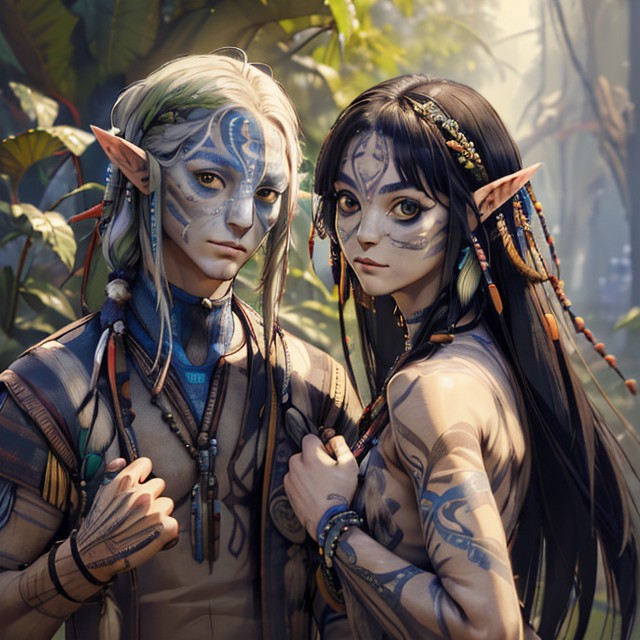
Belhaven's Elves are, for the most part, descended from a formerly enslaved population captured from local Elven tribes or purchased from other city-states. Some Elves from the local tribes also come and go from the city at will, trading goods and services with those who live behind its walls.
​
The Elves (or T'lalokee, which translates to "the speaking ones" in their own tongue) are inheritors of a rich tradition of storytelling, song, and magic. They are adept at navigating the perils of the wildnerness and often serve in the ranks of Belhaven's Rangers. While practice of The Mystery does not come naturally to any race, it is somewhat easier for Elvenkind thanks to their connection to the land and reverence for the spirits who dwell therein. Elves are also naturally resistant to the Glow of Lux, able to withstand its radiance unaffected. Because of this, their people have developed a great many crafts which utilize the power of Lux, from alchemy to artifice. The Elves are loathe to part with their secrets however, and consider Lux a deeply spiritual force to be revered rather than exploited.

Saurians

Picture
Across vast leagues and raging oceans, on a continent far to the south lies Khemet, the lost empire of the Saurians. Where once their people tamed great Archosaurs for war and industry, there now lies but ruined reminders of what once was. 

The Saurians who call Belhaven home descend from those of their people brave and hardy enough to have traveled this far north from the jungles of Khemet. Naturally, there are very few Saurians dwelling in Belhaven, most of whom live in cloistered neighborhoods of their own kind where the language and customs of their homeland are kept alive. Even so, the sight of a Saurian is an awe-inspiring thing, even for the Belhavian who feels they've seen everything the city has to offer. Saurians often find work as daring mercenaries, skilled artisans, and shrewd merchants whose shops often specialize in the rare and exceptional.

Mechans

Picture
Around a hundred years ago, something miraculous happened. Living relics from the past began to awaken all around the world. Rising from the ruined cities and desolate places which had been their tombs, the Mechans awoke to an age of darkness and ruin, far from the golden days which first saw the creation and flourishing of their kind. The Mechans remember little of this age, grasping at fractured memories and corrupted data for some sense of meaning, identity, and purpose. Most wander through this age of shadows hoping to fulfill whatever purpose they were made for. Others are merely out to survive.

The Mechans of Belhaven are no different from others of their kind, having awoken from the labyrinth beneath the city's streets to walk among its people and become part of this new age. Yet few find welcome in this new world, regarded by many as little more than curious machines and not as thinking, feeling, sentient beings with lives and dreams of their own.
Belhaven's size, prosperity, reputation, and relative safety have drawn inhabitants from every corner of the globe. While its geographical location on the western coast of Athrain sees it mostly populated by Humans, there is at least a small part of every surviving people group on AfterLight represented within the city's population. Most people tend to dwell in neighborhoods where others of their kind also live. It is quite common to find entire sections of the city carved out to reflect the cultural values and unique character of its majority inhabitants. Even so, there is a blending of cultures within Belhaven, not only in the liminal spaces between ethnic majority neighborhoods, but within the larger tapestry of the city as a whole. As far as culture goes, it is fair to say that Belhaven is both a melting pot and a salad bowl.
​

Intermarriage between Species is frowned upon, not only due to the explicit teachings of the Aventist church, but also due to the simple fact that a union between two members of different Species cannot produce children. Humans are biologically compatible with other Humans (whatever their ethnicity may be) just as Elves and Saurians can only reproduce with other Elves and Saurians, respectively (it goes without saying that Mechan do not reproduce biologically). Even so, there are occassionally childless marriages between interspecies couples, who may face ridicule and exclusion from mainstream society for their love.

The Powers That Be

 
Belhaven is, at least in name, a representative democracy with three governmental bodies who share and strive for power. At the top stands The Mayor's Office, an executive authority responsible for overseeing the general administration, welfare, and defense of the city. The Mayor, elected by popular vote, is the final word on whether or not a proposal gets signed into law and serves as the face of Belhaven's leadership. While the Mayor holds no official power over the other branches of government, their word carries significant weight and others in every field from business to industry to politics would do well to heed the voice of the city's leader.
​

Parallel to The Mayor's Office, The Assembly acts as Belhaven's legislative branch, drafting and codifying laws that shape the legal framework of the city. The Assembly is comprised of a two seperate bodies; The Senate and The Council of Spokesmen. Members of both bodies are elected from each Borough (though Senate terms are much longer and seats can be passed on to a successor before the term ends whereas Spokesmen's seats can only be attained via election). A single Senator is elected from each Borough and serves a twelve year term. The number of Spokesmen (and women) from each Borough depends on the Borough's population as of the latest census and Spokesmen serve their term half as long as Senators, for a total of six years. Both Senators and Spokesmen can be elected any number of times; there are no term limits for either. Each body serves a distinct purpose in the legislative process with Spokesmen drafting laws to best represent the interests of their constituents while it is the duty of Senators to codify the laws by way of a vote. The binary push and pull between The Senate and the Council of Spokesmen helps to balance executive and legislative powers, preventing the concentration of authority in a single entity.
Picture
Several Spokesmen debate the passage of a new law in Karst Hall
Tasked with interpreting and enforcing the city's laws, The Judicate ensures that justice prevails in Belhaven. The Judicate is divided into The Courts, who interpret laws, officiate trials to convict or exonerate those accused of a crime, and sentence the guilty to their punishments, and The City Watch who are tasked with enforcing the rule of law throughout Belhaven. The Courts do their best to fairly enforce the laws of Belhaven, ensuring that due process, trial by peers, and other legal protections are upheld for everyone accused of a crime. Outside the Courts, it The Judicate also oversees The City Watch, a militant organization of trained soldiers whose job is to keep order within the city. The Watch has the authority to arrest suspected criminals and hold them for trial, investigate crimes, search residences and citizens for evidence, and interrogate anyone suspected of involvment in or witness to a crime. The powers of The City Watch are very broad and often subject to abuses, all in the name of keeping Belhaven safe from a world ravaged by Sin and destruction. Arbiters of The Judicate are not elected but appointed by The Mayor and approved by The Senate. The Judicate's Arbiters then select judges to lead the courts and conduct trials, lawyers to prosecute criminals on behalf of the city, and sheriffs to train, deputize, and lead battalions of Watchmen throughout the city.
​

Guilds & Factions

 
Belhaven is a city beholden to many powers. Some of these are duly elected bureaucrats while others hold power in a less official capacity. Each of these factions holds sway over some part of the city and its destiny, its devotees tirelessly working towards their group's esoteric goals. Among the many groups and organizations within Belhaven, there are thirteen which stand head and shoulders above the rest, their influence felt far and wide, even beyond its walls.
The 99th Legion
The 99th Legion is a battalion of legendary renown consisting of a mere 99 warriors, each the equivalent of a hundred ordinary soldiers. As the most elite military force in Belhaven, these elite operatives are sent on missions no ordinary battalion can handle. These mercenaries fight for anyone who can afford to hire them, forsaking all honor and owing allegiance to none but their own. 
​

​Membership
A member of the 99th Legion is called a Legionnaire. 
The Legion consists of no more than 99 warriors at a time and will only admitm a new member if they fight and kill a current member in single combat. Age, race, and gender are irrelevant; all that matters is fighting prowess (though the Legion does not look favorably on the use of magic). The Legion does keep a contingent of young , highly trained apprentices ready to take up arms should its ranks ever be serious depleted and in need of bolstering. These Cadets maintain a hierarchy amongst themselves of those ready to attain full membership upon the death of a Legionnaire.
​

Picture
A Legionnaire trains in the yard at Fort Pax
Base of Operations
The 99th Legion operates out of Fort Pax, a squat and dour fortress located in Prydwen which serves as their home, training grounds, and stronghold.
Goals & Beliefs
  1. Make money and win glory by fighting the most difficult battles.
  2. Be known as the toughest, strongest, fiercest warriors alive.
  3. Honor is a lie and virtue is a liability; victory is all that matters.
  4. Weakness is intolerable; grow strong or be culled.
  5. Never flee. Never surrender. Never lose.
Symbols
Stag, crossed spears, Corinthian helmet
The colors gold, red, and brown

Maxim

"Victory Over All"
The Alcurist's College
Clad in thick leather coats, gloves, a beaked mask and goggles to protect from infectious disease, an Alcurist is an enigmatic but welcome sight in places afflicted by blight and pestilence. Their ranks consist of physicians, alchemists, and healers well-educated in the medical sciences and healing arts, who have either chosen or been conscripted (as punishment for medical malpractice) into the life of a healer for hire. Though Alcurists collect coin for their services in order to make a living, their true purpose is to study disease and further humanity's understanding of biology and medicine as they chronicle their discoveries to share with other doctors.
​
Membership
A member of the Alcurist's College is called an Alcurist.
Skilled physicians may attain full membership and privileges within the College by completing a grueling exam after apprenticing under a full-fledged member for several years. Alcurists travel throughout the city and even through the wilderness to other city-states for the purpose of chronicling different diseases, collecting medical samples, and furthering humanity's understanding of sickness. 
Picture
An Alcurist in their signature mask, goggles, and protective clothing
Base of Operations
Since the founding of Belhaven, the Alcurist's College has operated out of a sprawling medical campus in Oldemere called Hermia's Green (making them one of the oldest guilds in the city).
Goals & Beliefs
  1. Understand the world's many illnesses and their treatments.
  2. Heal the sick and injured to advance medical science.
  3. There is nothing science and reason cannot explain.
  4. Every patient should pay for treatment in some way​​
Symbols
Coatl (winged serpet), plague mask, Winged Cross
The colors black, white, and green

Maxim

"Heal the World."
Arden Kai
Named for ancient champions of the Aventist faith, Arden Kai is an order of Exorcists trained to fight against the forces of Sin and the Hellbeasts it creates. This sect within the Aventist Church teaches that the gods cannot return to AfterLight until enough of the world's Sin is vanquished and sealed away. To this end, Ardents focus their efforts on rooting out and destroying Hellbeasts, clearing Dungeons, and sealing away Sin wherever they encounter it. While they may not wield all the political and social influence of the Aventist Church, they are a militant sect with the strength to protect themselves from enemies both within and without.
​

Membership
 A member of Arden Kai is called an Ardent.
Ardents are trained from a very young age to use their bodies and minds as weapons in the fight against Sin. They are taught not only the ways of war and the tenets of the Aventist faith, but the sect's secret arts for sensing the presence of Sin, resisting its corrupting influence, and sealing it away with powerful wards. While most Ardents adhere to the Aventist faith, devotion to the mission of destroying Sin supersedes loyalty to the church. 
​
Picture
Ardents fight the forces of Sin, able to resist its corrupting influence
Base of Operations
Arden Kai operates on two fronts; Saint Aurum's Basilica in Palladia, where the sect's leadership resides, making strategic decisions about the order and its goals, and its training/scouting headquarters, a fortress far outside the city walls known as Fort Tenebrae.
Goals & Beliefs
  1. The gods cannot return to AfterLight until Sin is vanquished.
  2. Let no man, nation, or creed hinder our holy mission.
  3. Root out and destroy Sin and its servants by any means necessary.
  4. Do not compromise, hesitate, or waver in the war against Sin.
  5. Obey the Law of the Aventist Church and honor its clergy.
Symbols
Wolf, sunrise, sword, Aventist cross
The colors black, silver, and red

Maxim

Ours is the Dawn
Ba Ha Na
While Aventism may be Belhaven's most mainstream religion, it is certainly not its one and only. Many practice an non-theistic religion focused on meditation, discipline, and self-improvement known as Ba Ha Na ("The Noble Way" in the language of far-off Natsura, where it originated). Ba Ha Na accepts the departure of the gods from AfterLight and places the onus for moral and spiritual well-being upon the individual; one must seek after their own salvation. To this end, practitioners of the faith spend a great deal of time meditating to hone their minds and senses, training their bodies through rigorous martial discipline, and gaining mastery over their inner lives.
​
Membership
A novice of Ba Ha Na is called a Hakur (which means "Seeker") while a long-time practitioner may be referred to as Afudan (literally translated "Effort"). The great masters of the faith are known as Baretisaram ("Enlightened One").
Picture
A Hokur spends a great deal of time honing both body and mind
While anyone may join the faith, most do not join a monastery or advance beyond the rank of Hakur, instead practicing the tenants of faith in conjunction with their everyday lives. Those who do must prove their dedication and willingness to transform entirely, both within and without, for the sake of enlightenment, a process which can take decades just to reach the religion's next tier.
​
Base of Operations
Ba Ha Na is a religion which operates out of locally operated temples with no real central power structure in place. It is up to each temple's head priest (who is likely a Baretisaram) to decide on just just how the temple is run as the tenants of faith are practiced and passed on to new believers.
Goals & Beliefs
  1. The gods have departed AfterLight and will never return.
  2. Salvation is up to each individual to attain through self-mastery.
  3. The mind is a prison; free yourself through meditation.
  4. The heart is a tempest; free yourself through serenity​​.
  5. The body is an obstacle; free yourself through training.
Symbols 
The lotus, serpentine dragon, the Dahmu Khor (holy symbols & writings)
The colors orange, white, and red

Maxim

"Know Thyself, Release Thyself."
The Blackwater Combine
Known to many as “the syndicate”, The Blackwater Combine is a multi-city network of criminals, smugglers, and black market traders who deal in everything from drugs to human lives. Operating out of the most lawless parts of The Pale, their agents have a foothold in every Borough, and a finger in every pie, either controlling the criminal element completely or having a large stake in it. The Combine enjoys a reputation for both thuggish ferocity and ruthless cleverness when it comes to bringing their ill-gotten goods to market, employing everything from hidden compartments to blackmail and bribery of officials to move goods between city-states. They are bold and brazen enough to travel the rivers, trek through dangerous wilderness, selling dangerous Arcanum, drugs, and even slaves into the highest echelons of society; wherever enough demand, you'll find a Blackwater merchant willing to sell.
​
Membership
 A member of the Blackwater Combine is called a Blackjack.
Local chapters of the Guild are self-governed and membership depends on how locals operate. Generally, any thug can join up, completing a few jobs before being trusted with more. Recruits are either arrested, killed, or advance as they are entrusted with more responsibility and risk...not to mention the obscene amounts of money they can earn.
​
​​
Picture
One never knows what goods will be on offer when meeting with a Blackjack
Base of Operations
 The Syndicate operates in every borough, across many different city-states. A hub of the guild’s operations is called a Cache. There is no central base of operations; if one Cache is hit, another simply takes its place. Most of The Blackwater Combine’s Caches are located throughout The Pale.
Goals & Beliefs
  1. If you can take it, it belongs to you.
  2. If it was taken from you, you didn’t deserve to keep it.
  3. There’s always a mark.
  4. There’s always a cost.
  5. There’s always an angle.
Symbols
Stoat, skull & crossbones, a bloody coin
The colors black, gold, and dark green

Maxim

"Everything is For Sale."
The Blood of Nocturne
The Blood of Nocturne is an elusive sect of assassins who trade a portion of their soul to the dark spirits of The Jade Court (a collective of the city’s spectres and dark spirits) in exchange for the power to kill. Though each assassin has their own motives for making this deal and is largely autonomous, the Caller may name any within the cult to perform a kill. As leaders of the Blood, the Callers are supposedly in communion with the Underkings of The Jade Court who grant their dark powers the guild's assassins. Each kill comes at a cost and any mortal willing to pay the price asked by death may call upon the Blood of Nocturne.
​
Membership
One who belongs to The Blood of Nocturne is called a Whisper.
Those who would join the Blood of Nocturne must seek the favor of the Jade Court, offering a portion of their souls to join the cult. If the Caller deems them worthy, they will undergo training and eventually a dark rite of initiation wherein the initiate is given a special tea which places them in a state of suspended animation, wherein their heart is cut out, killing them. The initiate stays dead for 6 days as their heart is embalmed. The embalmed heart is placed in the chest of the deceased and if the Underkings favor them, they will rise anew as an immortal Assassin; a full-fledged member of the Blood of Nocturne who remains bound to the service of The Blood and the Jade Court until their heart is destroyed.
​
​​
Picture
Those who call upon the Blood of Nocturne will be answered by a Whisper
Base of Operations
The Blood of Nocturne is a secretive organization who gathers in Shadow’s Reach, a secret lair beneath the sprawling grounds of the Field of Stones, a sobering monument in Harrow to those who lost their lives when the walls were breached.
Goals & Beliefs
  1. Death is a pathway, neither good nor evil.
  2. If ever a death is taken (a life is spared), an equal death must be repaid.
  3. There is no king or commoner; death comes to all mortals.
  4. Kill with purpose and efficiency, leaving no trace behind.
  5. Heed the Caller, for theirs is the voice of death.
Symbols
Raven, skull, bloody hand, jade dagger
The colors black, crimson, and silver

Maxim

Death Comes to All
The Candlekeepers
The Candlekeepers are a group of itinerant scholars, performers, and storytellers who seek to collect and retell the living history of the world. Keepers bravely travel the wilderness between city-states, bringing news and stories from lands afar. With theatrical flair, they recount historical tales, folk songs, and stories of the people asking only for new stories in return (and perhaps enough coin for a roof, a warm meal, and a few drinks). Lore collected is shared amongst fellow Candlekeepers, recorded by scribes, and stored in a library fortress where books and scrolls from ages long passed are kept safe from the ravages of time and ignorance. Keepers are highly educated and skilled in many fields from survival to etiquette to the arts.
​
Membership
A member of the Candlekeepers is called a Keeper.
​Anyone with a passion for knowledge, a good memory, and a talent for the arts may join. The Guild assigns new Keepers to apprentice under more experienced members in order to become well versed in AfterLight’s histories and to refine their skills and improve their chances of survival before venturing out on their own.
​
​​
Picture
Keepers study and store a treasure trove of knowledge at Chandler's Keep
Base of Operations
The Candlekeepers operate out of a library-fortress known as Chandler’s Keep. Located in Arx, Chandler's Keep acts as their home, a repository of knowledge, a training grounds, and a hub where Keepers can share information after returning from lands afar.
Goals & Beliefs
  1. In order to be safely preserved, knowledge must be shared.
  2. Today’s trivia or heresies may be valuable in the future.
  3. Story is powerful and alluring: use it as a tool to teach.
  4. Remain politically neutral so as to travel freely.
  5. Always learn, always teach; in one you’ll find the other. 
Symbols
Mockingbird, quill & parchment, a burning candle with a hand beneath it
The colors green, white, and navy blue

Maxim

Knowledge Shared is Knowledge Immortal
Light's Vigil
Hailed as the city's greatest defenders, Light's Vigil pulls its membership from the most elite guards, soldiers, adventurers in Belhaven - those who have demonstrated their willingness to lay down their lives for the sake of others. Some say the Genii Locorum (the embodying spirits) of Belhaven grant them special powers to protect the city and its people in times of need. The goals of The Vigil are simple: to protect Arborleight and its citizens from all threats, foreign and domestic. Vigilants have special authority to enforce the law and protect the city which extends beyond that which normal guards are entrusted with. Though they are an autonomous, self-governed group, Light's Vigil serves at the pleasure of the Senate and can be dissolved by a unanimous vote within the Senate at any time. 
​
Membership
A member of Light's Vigil is called a Vigilant.
While anyone can join (or be conscripted as punishment for a crime) into the ranks of the city watch, only the best and brightest are ever extended an invitation to join the Vigil as apprentices. 


Picture
Self-proclaimed defenders of Belhaven, Vigilants patrol the streets for signs of trouble
Base of Operations
Light's Vigil has many smaller fortifications and secret supply caches throughout Belhaven, including a tower in Harrow known as Last Hope. The group's main base is a castle/monument in Concordia known as the Hall of Heroes where the city's fallen heroes are enshrined in memorial.
Goals & Beliefs
  1. Defend the city of Belhaven and protect its people from all threats, foreign and domestic.
  2. Hunt down and eliminate all Hellbeasts within the city.
  3. Respect the laws of Belhaven but hold first to your oath.
  4. ​Honor the Genii Locorum who protect and guide Belhaven.
  5. Uphold the weak, punish the wicked, ensure life and freedom for everyone.
Symbols
Lion, shield and crossed swords, torch, laurels of Belhaven
The colors blue, red, and silver

Maxim

By Day the Watch, By Night the Hunt
The Hectors
Every craftsman, merchant, builder, and artisan labors with the dream of joining the prestigious ranks of The Hectors. Known far and wide as the greatest artists of their age, the Hectors are an ancient order whose origins are shrouded in mystery. By all accounts, it seems their order pre-dates the founding of Belhaven by centuries. On the surface, the Fraternity of Labors (as they were once known before opening their ranks to women) works day and night to bring Belhaven (and indeed, every city they operate within) into a new golden age, crafting and trading goods, designing cities, and constructing wonders unseen since before the world’s end. They work as architects and masons, blacksmiths and artisans, subtly drawing arcane patterns with streets and avenues of Belhaven's architecture in order to draw power into a central manse controlled by the Hectors in service of their true objective; to create the Philosopher's Stone, the ultimate source of arcane power.
​
Picture
The mysterious Hectors are the greatest craftsmen in all the world
Membership
A member of this guild is called a Hector.
​A member of the Hectors in good standing must personally vouch for a craftsman who wishes to join the guild. Hectors will only vouch for artisans and builders at the top of their field, who exhibit the highest levels of skill and creativity. Members are expected to perform at the peak of their fields and are reviewed annually to ensure the level of quality for which the guild is famed is maintained.


Base of Operations
The Hectors maintain beautiful, functional, and elaborately decorated guildhalls called Slates throughout Belhaven. Their headquarters is located in the industrial Borough of Tretagar in a palatial manse, properly named Vendrel Hall but known colloquially as The Anvil. The central manse to which arcane power in the city is drawn is known only to highest ranking Hectors; Temple Bruen, located in the Borough of Palladia.
Goals & Beliefs
  1. Perfection is attainable; seek it in all you do.
  2. Obey the law and work with all your heart.
  3. Chaos is the natural state; order is revolutionary, beauty the highest calling of Man.
  4. To create, something must be destroyed; all creation is sacrifice. ​​
Symbols
Gear, anvil and hammer, hart, elaborate symbol called the Primasine.
The colors brown, blue, and gold.

Maxim

From the Mind - By the Hand - Into Eternity
The Lodestar League
The world beyond the walls of Belhaven is a dangerous and mercurial place where rampant Hellbeasts, the corruption of Sin, and the usual dangers of unpredictable weather, limited supplies, and unreliable maps make travel, even between nearby city-states a dangerous prospect. The Lodestar League are celebrated rangers and scouts who explore the wilderness surrounding Belhaven, searching not only for food and natural resources which could aid the city’s survival, but monitoring the movements of Hellbeasts throug the region. Their secondary goal is to create reliable maps of Belhaven's wild country and the maps they have managed to draft so far have proven an invaluable asset to the city.
​
Membership
A member of the Lodestar League is called a Pathfinder.
Pathfinders are renowned heroes throughout Belhaven, enjoying a well-deserved celebrity status among the populace. While anyone with a curious mind and basic survival skills may apprentice with a master Pathfinder and accompany them on their journeys to learn the ways of the League, the reality is that there is an incredibly high mortality rate among Pathfinders.
​​
Picture
Pathfinders are masters of navigating and surviving the dangers of the wilderness
Full-fledged Pathfinders are rare and veteran Pathfinders are almost completely unheard of. Those who survive long enough to become card carrying members of the Lodestar League are completely autonomous but may request support from the League in gathering an expeditionary crew and supplies; if the League deems an expedition worthwhile, they will finance it. If not, the Pathfinder must raise their own support from the city’s nobility, who often patronize famous Pathfinders for the sake of the notoriety such a philanthropic endeavor brings them.
​
​​
Base of Operations
The Lodestar League operates out of an outpost not far beyond the walls of the city, a small fortress and training ground called Lodestar Hollow.
Goals & Beliefs
  1. Keep a watchful eye on the lands surrounding Belhaven.
  2. Document the unknown with detailed maps and notes.
  3. There is always more to see.
  4. Curiosity is mortalkind's greatest asset, cunning its best tool. 
Symbols
Hawk, bow and arrow, a compass rose
The colors green, brown, and gold

Maxim

To Farthest Horizon
The Redcloaks
The Redcloaks are a guild of infamous thieves who fight on behalf of the downtrodden and oppressed. Once, all members of the guild wore garish red cloaks to identify one another. At the height of tensions prior to Belhaven's revolution, it was actually illegal to wear a red cloak thanks to the actions of this guild. Though the practice has long been abandoned in favor of less conspicuous attire, the name and legend remain. Beneath the unfair yoke of economic disadvantage, The Redcloaks have risen to prominence for their revolutionary brand of justice, stealing from the rich to provide for the poor. The Redcloaks, at least ideologically, work to balance the scales in favor of the common man, assassinating cruel taskmasters, robbing the vaults of merciless landlords, and intercepting tax convoys to steal back wealth from the hardworking people of Belhaven.
​
Membership
A member of this Guild is called a Redcloak. Members are often recruited from the poor and powerless. Beggars and servants act as spies. Merchants secretly supply the guild with funding and resources. On rare occassion, idealistic nobility join their ranks, using their wealth and connections to further the Redcloak's cause. For their protection, these individuals are rarely more than periphery members, entrusted with little information. The Guild’s elite operatives are recruited from orphans and trained from a young age in stealth and secrecy to become master thieves. Anyone who works with the Redcloaks may recognize a kindred spirit with the passphrase “I bear the red.”

Picture
Champions of the downtrodden, a Redcloak is never far from those in need
Base of Operations
The Redcloaks gather beneath the Chapel Madrigal in Arx, meeting in their secret headquarters each full moon to share information and plan their next move.
Goals & Beliefs
  1. Helping the oppressed is the call of all who bear the Red.
  2. There is no such thing as a fair fight.
  3. No one is beyond the reach of justice.
  4. Cunning is better than strength.
  5. Preparation is better than cunning. ​​


Symbols
Fox, a red cloak, a special series of signs and hand signals
The colors red, silver, and white

Maxim

I Bear the Red
The Solomonari
Known across multiple city-states as both educators and scholars of the Mysterious, the Solomonari are equal parts philanthropist and occultist. In Belhaven, the group is among the newest of the city's guilds, establishing a foothold here a mere handful of decades ago. Nonetheless, the order is quite old, and a great many traditions abound within its hallowed halls. The Solomonari see themselves as educators and researchers, working to spread the light of knowledge by educating the masses in science, history, mathematics, and the arts. But their deeper purpose is to seek out and train young Mages, those with an inborn gift for learning and wielding the powers of The Mystery without the intervention of Daemons, Arcanum, or the curse of Pandora. The order works to find nascent Mages in any place where it holds influence, teaching them not only the skillful and responsible use of The Mystery, but turning their hearts towards advancing the power and influence of the Solomonari.
​
Picture
Alum of the Solomonari are educators, researchers, and practitioners of the Mysterious
Membership
A member of ​the Solomonari is called an Alum, having been educated by the organization and accepted into its ranks. 
The Solomonari work to educate the populace, building schools and holding classes for all ages to offer a basic education in core subjects. Their organization consists of all kinds of educators, but the inner circle of the guild is made up of Mages of varying skill and rank, from the lowly Acolytes to the advanced Chamberlains to the orders handful of leaders, the Primes.
​
Base of Operations
While the Solomonari have many schools throughout Belhaven's boroughs, their true headquarters (and the place where budding Mages are trained) is a sprawling campus in Oldemere called Evenar Academy.
Goals & Beliefs
  1. Educate the masses and thus preserve the light of civilization.
  2. Seek out untrained Mages and lead them in the true way.
  3. Unravel the deepest secrets of The Mystery​​.
  4. Demystify magic and remove all fear of its practice from the minds of the public.​
Symbols
Serpent, oroboros, an open book with flame resting on the pages
The colors green, orange, and white

Maxim

Let No Secret Remain
The Vesper Owls
While the Senate, Spokesmen, Councilors, and Mayors run things on paper, the real power in Belhaven rests within the hands of an elite few. The city’s oldest, wealthiest, and most powerful families comprise a secret society within the upper echelons of Belhaven’s social circles. For ages, nobles and commoners alike have whispered stories of The Vesper Owls, a shadowy organization that pulls the strings behind the scenes and knows the secrets of everyone in power, thanks to their network of spies known as Specters. Anyone who crosses The Owls tends to meet an unfortunate end at the hand of their Talons, elite assassins who often make the deaths of their targets look like accidents. Everyone in the courtly realms has heard whispers of The Vesper Owls, but few believe they actually exist. Make no mistake; the network is real and their eyes are everywhere. It is said that there is no secret to which they are not privy, no mystery they cannot unveil.
​
Picture
The Owls deal in secrets, manipulating Belhaven's destiny from the shadows
Membership
Though "Owl" is a general term for its members, there are three divisions within the guild; Specters are the organization's spies, Tourners are its information brokers, and Talons are its ruthless assassins. While Specters and Talons can come from any walk of life, they are typically recruited from close family connections or those with a reputation for skill, discretion, and loyalty to the core families who comprise The Vesper Owls. Tourners come almost exclusively from the ranks of a few wealthy, well-connected families in charge of the guild or on the periphery of leadership.
​
Base of Operations
A grand hall (Lizette Hall) in Moroque, affectionately known among Specters as The Ocularium, serves not only as a popular social destination for nobility, but as the primary gathering place for the Owls to meet and exchange information.​​​
Goals & Beliefs
  1. There is no truth; everything is malleable.
  2. Nothing is sacred and nothing is forbidden.
  3. Everyone has a secret and a price.
  4. We founded and built this city; it is ours to rule.
Symbols
Owl, scales, open eye with a crescent moon in the iris
The colors blue, indigo, and gold

Maxim

The Eyes to See, The Will to Rule

Genii Locorum

 
The powers which influence the destiny of Belhaven are not only political or factional in nature, but supernatural. Throughout the world of AfterLight, spirits called Daemons (or Genius Loci - plural: Genii Locorum) who influence the atmosphere, emotion, and undertone of a particular location and Belhaven is no exception. Every building, every street, every Borough, every thing in the city from the simplest stonework to the grandest cathedral has a patron Daemon who embodies its essence, its will, and its ultimate destiny. The greater the spirit, the greater their holdings and influence; the lowliest spirits rule over gutters and streetlights while Belhaven's greatest Daemons govern entire Boroughs. They are not "gods" per say, though many in the world of AfterLight worship them as such, especially those who live in wild, dangerous places where the Genii Locorum hold the most sway. Rather, Daemons are simply elemental beings who embody the will of a particular place.
Picture
Belhaven is divided into two Spirit Courts, the Court of Bells and the Jade Court
Naturally, there are a host of spirits, both fair and foul, who call Belhaven home and whose purposes are often at odds not only with one another, but with the goals of Belhaven's citizens. Even so, each individual Genius Loci believes they are working in the best interest of Belhaven as a city (even when they are working against its citizens and leadership). The Genii Locorum of Belhaven order themselves into various Spirit Courts, unified by similar ideals, ambitions, and general philosophy about how their goals may be achieved. While there are gatherings of spirits large and small throughout the city, all spirits within Belhaven fall into one of two major Courts (whose purposes are often at odds with one another).
THE COURT OF BELLS
This Court of powerful elemental spirits guides the destiny of the city and that of the land around it, watching over the welfare of Belhaven from its smallest street to its towering edifices. The Court of Bells is comprised of every Daemon in Belhaven, from the elemental spirits of lampposts and cobblestones to the city's mighty Gargoyles, from the Daemons of tall buildings to the Lords and Ladies of the Boroughs themselves. The Court of Bells is led by this nobility, those Daemons who rule over each Borough with the Gossamer Queen, Lady Isbel Illengren, presiding over them. She rules with a flame in her eyes and compassion in her heart, caring deeply for the mortals who make Belhaven their home. Of all the spirits of The Court of Bells, the Gossamer Queen most embodies Belhaven's ethos of fierce independence and boundless aspiration.
​

THE JADE COURT
When a person dies, their spirit is released to travel paths unknown through the afterlife. But some become trapped, bound to the material plane and unable to move on. Within Belhaven, these restless ghosts inevitably become entangled in the Jade Court, a collective of mortal souls unable to pass from this plane until the passions that hold them here are resolved. The Jade Court offers a shadow of belonging and community to lonely souls and potential allies (and enemies) who may help one to resolve their anchors and move on. This Court is ruled by thirteen Underkings, ancient specters who have accumulated a great deal of knowledge and power through the long, restless ages. Some speculate that these terrifying apparitions have been around since before the founding of Belhaven, lingering on since the apocalypse. Others believe the Underkings are the city's founders, unable to move on as their eternal fate is tied to that of Belhaven itself.

Daily LIfe

 
Belhaven has always been a melting pot where the remnants of belief, custom, language, and overall social mores which survived the apocalpyse have come together to form an amalgam stronger and more beautiful than the sum of its individual parts. In the nearly 300 years since its inception, the city has grown from a scrappy enclave of survivors to a thriving, modern metropolis with a culture all its own. For all its inequities, for all its many flaws, Belhaven remains a bastion of freedom and civilization even as the forces of depravity, corruption, and terror prowl just outside its walls.
​

Climate and Wildlife

The great city of Belhaven is situated in a lush valley within the foothills of Mount Thelisor and enjoys a temperate coastal climate with mild temperatures and distinct wet and dry seasons, influenced by the nearby ocean currents. The city's coastal proximity makes Belhaven prone to occasional bouts of dense fog, creating an atmospheric and mysterious ambiance. The climate, combined with the city's diverse topography, contributes to the unique and picturesque environment that residents and visitors alike find enchanting. The Winter months are generally cold and wet, with frequent rainfall and occasional snowfall, though fronts of extreme cold are rare and temperatures generally hover around 0 to 3 degrees centigrade during the day (dropping down to around -17 at night). Spring brings warm rains, blooming flowers, and joyous greenery bursting with life throughout the region. The mild, sunny days of Spring eventually give way to the heat of Belhaven's Summer months, which are characterized by warmer temperatures (around 26-32 degrees centigrade) and relatively dry conditions - the perfect weather for outdoor activities. Belhaven has very few days of uncomfortable heat, and the summer months offer residents ample opportunity to enjoy the city's numerous parks and green spaces. Fall brings cooler temperatures, with deciduous trees in the city showcasing a vibrant display of autumnal hues.
​
Many varieties of animals make their home in the woodlands and foothills surrounding the city. Many even call the streets of Belhaven home; pigeons, raccoons, dogs, cats, and mice scurry through the alleyways, frustrating every attempt The City Watch makes to catch and contain them. Outside the city's walls, a vibrant ecosystem thrives; elk, wolves, foxes, wild boars, lizards, bears, bobcats, opossum, owls, along with many species of bird and insect all make their homes on land while trout, salmon, and bass rule the waters. The powers of Sin seem to hold no sway over these creatures, who fear no Hellbeast. The marauding monstrosities usually pay no mind to the animals who live in Belhaven's wilderness, fixing their malice only upon Mortalkind.
​
Picture
An incredible variety of plants and animals make their homes in the woodland around Belhaven
The region is home to many varieties of deciduous trees, coniferous pines, majestic redwoods, ferns, lichens, and many types of flowering plants. Herbs, mushrooms, and berries can all be gathered in the forests of Belhaven, offering uses in medicine and cooking. Redcrest Maples grow throughout the city, offering bursts of color throughout the year; beutiful green in the spring and summer, radiant red in the fall and early winter. Vines of Wandering Wisteria grow up buildings and over arches, blooming with fragrant white flowers in the spring. There are also many varieties of fruit trees; apple, plum, pear, fig, apricot, cherry, and even peach orchards are cultivated and cared for by farmers, alongside many other food crops like wheat, corn, barley, hops, grapes, berries, tree nuts, potatoes, kale, spinach, lettuce, broccoli, cauliflower, carrots, beets, radishes, and various kinds of peas, beans, and squash.
​

Life and Times

 
The average Belhavian lives to be around 65 years of age, a staggeringly long lifespan in the otherwise dark and dreadful world of AfterLight. A child begins their education in the Common School System at age 5, attending daily classes at Primary School to learn the basics of reading, writing, and mathematics. From the ages of 10 to 14, adolescents attend Secondary School, where they study more advanced concepts in history, literature, philosophy, oration, and the arts and sciences. At 15, a young person is considered a full-grown adult and though they may wed, be conscripted into military service, or be tried for crimes as an adult, they are not yet entitled to the rights and privileges of a full-fledged citizen. Only after completing Tertiary School (which consists of either an apprenticeship or further tutelage in a classroom) at the age of 18 is a graduate considered a fully realized citizen and afforded the rights to vote, own property, borrow books from public libraries, and either enter the workforce or continue their education at one of Belhaven's many colleges.
​
Picture

Law Enforcement and Defense

 
The walls of Belhaven are everything. They are the city's first and best line of defense against the incursion of Hellbeasts. Built atop the walls of the ancient pre-apocalyptic city where Belhaven now stands, the city's outer walls are ten meters high and thick enough for three horsemen to ride abreast. The inner wall is slightly smaller at around eight meters high and two meters thick. The wall around the city's central districts is six meters high and two meters thick. And while imperfect (as the Harrowing of Syner's Walk a mere three years ago proves), the walls of Belhaven have stood the test of time, protecting the city from countless threats over the three centuries it has stood in defiance of the darkness around it. 
​

​The City Watch
The walls and streets of Belhaven are patrolled by The City Watch, an order of soldiers and conscripts trained to protect the city from destruction and chaos. The City Watch is equal parts police force and militia, fighting off invading armies and marauding Hellbeasts on one side of the wall while arresting criminals and keeping lawful order on the other. Naturally, this is a difficult job which requires not only a great deal of training, but a great deal of manpower. And despite the illusion of strength they try to project, the Watch has neither the training nor the manpower necessary to do the job alone. Stretched thin in every direction, The City Watch is often forced to rely on the skill and courage of mercenary adventurers who are willing to assist in tasks the Watch hasn't the resources (and oftentimes, the willingness) to deal with.
From those on the wall to the Watchmen on the streets, The City Watch is organized hierarchically. On the lowest rung of the organization are the many boots on the ground, the individual soldiers referred to as Wardens. The Wardens are subdivided into Cadets (the newest recruits), GuardsmenKnights (seasoned soldiers formally recognized by the Senate), and Knight-Captains (those just below the next rank of Watchman).
​

Picture
A Captain (right) listens to a report from one of his Wardens (left)
From those on the wall to the Watchmen on the streets, The City Watch is organized hierarchically. On the lowest rung of the organization are the many boots on the ground, the individual soldiers referred to as Wardens. The Wardens are subdivided into Cadets (the newest recruits), GuardsmenKnights (seasoned soldiers formally recognized by the Senate), and Knight-Captains (those just below the next rank of Watchman). Captains comprise the next rank of Watchmen, tasked with the command of one or more battalions of Wardens. A Captain's Tier designates how many battalions he or she commands. Within the Captains, there are specially trained Inquisitors whose keen eyes, sharp wit, and ability to think outside the box grant them special duties and privileges. Inquisitors are given the onerous task of investigating rapes, murders, and other horrendous crimes that would turn the stomach of any other Watchman. Though Inquisitors do not command any battalions, they may requisition the services of any Watchmen or civillian they deem necessary to resolve a case. The highest ranks of The City Watch are filled by the city's twelve Doyen. One Doyen is assigned to each of Belhaven's twelve Boroughs, overseeing the activities of all Watchmen within that Borough. Doyen are very rarely involved in operations on the ground, commanding their troops from afar and coordinating efforts with one another and the Mayor, whom they answer to directly.
Picture

Criminal Activity

 
Belhaven is not the utopia many envision it to be. Despite its idealistic aspirations, Belhaven, like any large city, has its share of crime, which is exacerbated by the great amounts of social and economic injustice within the city. The architecture of Belhaven is testament to its inequities; the city's poorest and most vulnerable are forced to live in squalor and great danger amidst the crowded streets of The Pale, closest to the Hellbeasts lurking just behind the city's walls. Here, the presence of crime and poverty are most pronounced, and though the middle class dwelling in The Oppidum believes itself better off, there are still criminal elements to contend with. Even the upper echelons of society who live in the cloistered citadel of The Axis are not immune to the impact of crime as spies, blackmailers, and assassins infiltrate the inner circles of power.
Picture
Rampant crime makes it dangerous to walk Belhaven's streets at night
The city's criminals tend to organize in gangs of like-minded rogues, brought together by mutual goals and the strength of numbers. For the most part, these gangs operate independently of one another, staking out their territory and avoiding interference with one another and the disrespect such actions imply. The ever-shifting landscape of alliances and rivalries can be difficult to keep track of, but there is a tenuous peace between the largest and most powerful gangs as all recognize the mutually assured destruction that large-scale conflict would bring (this does not always deter skirmishes between rival gangs from time to time, however).
​
The city's largest gangs include The Gallow Men from Harrow, The River Rats who operate from the dockyards of Riven, Pridwen's Pride who claim the titular Borough as their own, and The Blood Seekers of Arx. The leaders of these gangs meet on a regular basis to entreat with one another, pay respect, and make any necessary reparations for grievances real or imagined. For now, the gangs of Belhaven have peace. But should old wounds be re-opened, the streets of the city will run red with blood.
Not all criminals in Belhaven are indiscriminate cutthroats, however. A group of benevolent burglars calling themselves The Redcloaks have been operating within the city since the high days of its revolution. Preying on the wealthy to care for the poor, The Redcloaks were once known by their garish red cloaks by which members of the guild could recognize one another. These days, their methods are a bit more subtle but no less daring. Wherever there is injustice, wherever there is oppression, wherever the rich grow fat on the backs of the poor, you will find The Redcloaks.
Picture

Economy

 
Belhaven grapples with significant wealth inequality, evident in the distinct living standards across boroughs. The poor reside in The Pale, the middle class in The Oppidum, and the wealthy elite in The Axis. Opportunities for social mobility are severely limited for those not born in the upper stratums of society. Most people work as common laborers, with available jobs largely dependent on the industries that can be found close to home. In Arx, most are miners or service the mining industry in some capacity. In Riven, most are dock workers, shipwrights, or work aboard a ship in some capacity. And so it goes, on and on through each Borough, with most people working to serve the needs of their home district. By and large, employment in The Pale is limited to hard labor while The Oppidum offers more opportunities in skilled trades and industry. In The Axis, the gentry are either wealthy enough to never work a day in their lives or find gainful employ as doctors, lawyers, professors, clergy, and other jobs which require a great deal of education.
​

Coin of the Realm

Currency in Belhaven is made from inert Lux and comes in pentagonal coins called talenth. A single talenth consists of five triangular bits which can be broken off of the coin or reattached through a force akin to magnetism. Twelve Talenth can be combined into a dodecahedron known as a lustre (plural: lustrum).
  • A Bit is worth 1 Lux
  • A Talenth is worth 5 Lux
  • A Lustre is worth 60 Lux

1 Lux is the real-world equivalent of one US Dollar.
While Belhaven is a prosperous and capable city-state, able to produce much of the food, energy, and other products it needs for daily life, it is made all the stronger and wealthier by trading with neighboring city-states, who provide many things Belhaven simply can't acquire on its own. More often than not, goods are exchanged for Lux on the open market. Other times, goods are bartered for other goods. Trade in large cargo is conducted by way of ships floating down Bel Abris (and rowed back upriver to Belhaven). Over land, smaller caravans must travel under heavy guard and even then, can only carry small loads that can be moved quickly over short distances as the danger of encountering Hellbeasts is simply too great; anyone shipping goods over land must be prepared to lose the shipment and all personnel at a moment's notice.
Exotic luxury goods that find their way into Belhaven typically stay at the top of the social foodchain as very few among the city's middle and lower classes can afford to spend what little they have on lavish goods like wines, fine clothing, perfumes, artwork, and quality Arcanum to make one's life easier. As such, the city's have-nots hold a great deal of resentment for the haves, not only for the lives of comfort and luxury they enjoy (often simply by being born into the right family), but for the peace and safety they enjoy, protected in sprawling manors deep in the well-fortified heart of the city.
Picture
Traders ship a variety of goods into and out of Belhaven
Picture

Political Parties

 
With upward mobility limited due to social and economic disparity, it is exceedingly difficult for anyone from the lower or middle classes to attain public office, as the process to gain traction and public support costs a great deal of time and money. Naturally, a number of political parties have formed to help elect and appoint individuals with similar ideology and goals into the city's various governmental roles. While this has helped to mitigate the costs of running for office, making the political machinery available to anyone who catches the party's eye, the existence of political parties has also made Belhaven's politics somewhat fractious as citizens identify themselves and each other by the party they vote for.
There are many political parties who seek control of Belhaven, but four are most prominent: The Return Party, The Liberation Party, The Alliance Party, and The Grand Endeavor.
Picture

The Return Party

Authoritarian - Right
Espousing a belief that Belhaven was greater and grander in the past, the Return Party works to bring the city's policies more in line with the way things once were, working against the so-called progress that would threaten safety, civility, and the high morals people once lived and thrived by. In reality, the Return Party would see a return to rule by the city's aristocracy and works to consolidate power in the hands of the wealthy and powerful, maintaining power through political maneuvering and the use of propaganda.
  • Strong central authority
  • Highly moral/religious
  • Instigates "culture wars"​
A member of this party is called a
​Returner

Picture

The Liberation Party

Libertarian - Right
Believing in personal freedom, self-reliance, and individual responsibility above all else, the Liberation Party works to reduce the power and influence that government and the elites of Belhaven hold over the lives of citizens. They are ardent believers in making one's own destiny and reaping the consequences of one's own failures, ignoring the inequities inherent in the system, the need for social compassion, and the drift towards anarchy and injustice absent strong, moral leadership.
  • Freedom and autonomy
  • Weak central government
  • Trends towards anarchy
A member of this party is called a
Liberator
Picture

The Alliance Party

Libertarian - Left
The high ideals of freedom, equality, and justice for everyone drive the members of this party to fight against entrenched ideals and autocrats who would oppress and exploit the people for personal gain. Of all Belhaven's political parties, The Alliance Party is perhaps the most diverse, with members belonging to every race, creed, and social stratum. They are often divided, however, and unable (or unwilling) to reconcile their high ideals with the harsh and unfortunate realities of today's world.
  • Compassion and equality
  • High-minded, unrealistic
  • Diverse but fractured
A member of this party is called an Ally
Picture

The Grand Endeavor

Authoritarian - Left
The Grand Endeavor is to make all people equal, not only under the law, but in terms of wealth and social opportunity. To this end, the party seeks to reconcile Belhaven's great inequities by better distributing the great wealth and power at the top of society. Strong central power is required to bring oppressors to heel and secure freedom and prosperity for all...an unfortunate reality which often leads those espousing this doctrine to become the corrupt, oppressive powers they so despise.
  • Strives for economic equality
  • Fights against the elite
  • Stifles prosperity
A member of this party is called an Endeavor
Picture

Education

 
Thanks to the efforts of philanthropists, educators, and guilds like The Solomonari and Candlekeepers, Belhaven boasts a fairly well-educated populace. Most people can read and quality libraries, colleges, and schools offer a free to low-cost education to anyone who wishes to learn. A publicly funded school system serves children from ages five to eighteen, though many students drop out to support their families, especially children number among the economically disadvantaged. Private tutors are common among the wealthy, leading to distinct educational trajectories for different social classes as only the children of middle and upper class citizens tend to graduate and go on to pursue higher education.
​

Belhaven's Common School system is organized into Primary, Secondary, and Tertiary tiers. From ages 5 to 10, students attend Primary School where they learn the basics of reading, writing, and mathematics. From ages 11 to 14, students attend Secondary School where they study history, literature, philosophy, oration, the arts, and the sciences. At age 15, a student receives their first diploma and is considered graduate who may then enter Tertiary School, which consists of either an apprenticeship (the route taken by most middle class graduates) or further study into the more niche and advanced fields of academia. At age 18, a student is finished with their studies and graduates from Common School with full honors and entitlements. Those who graduate from Common School are allowed to vote, own land, borrow books from public libraries, and (if they so desire) continue their education at one of Belhaven's many colleges.
​

The Dropouts

Many children do not finish their studies, especially those who number among the poor and otherwise disadvantaged. In these cases, children are often required to enter the workforce early to provide another income for their struggling families or stay at home to care for ailing family members and younger siblings. Those who fail to graduate from Common School find their opportunities in life severely limited as they cannot vote or own a home of their own. These individual tend to struggle for the rest of their lives, unable to rise out of their poor station in society due to both a lack of education, lack of opportunities, and inability to pull the levers of political power that could better their situation. Many of these unfortunates turn to either criminal activities or soldiering for the City Watch or some other paramilitary organization in order to make their way in the world.
Picture
While anyone can enroll in college, students are typically young (human) adults
There are a number of reputable colleges and foundations for continuing education to be found in Belhaven. Attendance is limited to those who have graduated from the Common School System and can either afford the high cost of attending classes or have secured one of the few scholarships available to promising pupils.

Those who wish to study anatomy and medicine may attend the College of Alcurists, even if they have no desire to join the organization of traveling healers. The college specializes in the the study of anatomy, surgery, pharmacology, and the spread and treatment of infectious disease.

Though Evenar Academy is, ostensibly, a normal school on the surface, The Solomonari identify and recruit those with potential to master the arcane, offering college-level courses to those who have graduated from the Common School System yet still wish to delve deeper into their study of The Mystery.

Darnouth is a prestigious and well-respected college which has educated many great men and women throughout Belhaven's history. The ancient school is no stranger to secrets, however, and many whisper of secret societies and dark rituals taking place within the institution's hallowed halls.
Picture

Recreation

 
Belhaven's upper society enjoys opera, art museums, and orchestra concerts in their beautiful concert halls, parks, and green spaces. The poor and middle class enjoys some of these amenities but due to the constraints of time and money, are often forced to limit their interests to family, work, and religious services, though many are often able to catch a public performance by Candlekeepers or other traveling bards.
​
Thanks to the efforts of its educators, most people in Belhaven are literate, making reading a popular hobby amongst all citizens, regardless of social strata. Authors and publishers can enjoy a great deal of success with a popular work and may even become celebrities (much to the chagrin of the often introverted writers who attain such status). The most successful books are often sold outside of Belhaven, gaining notoriety in foreign city-states as well, and the best works of foreign authors often find their way into the hands of Belhaven's most voracious readers.
​

Most in Belhaven are also able to attend theatre of some sort, be it in lavishly appointed (and expensive) private booths or standing down on the floor, close to the stage where tickets cost a mere talenth to see the show. As such, theatre is a favorite pastime for many, who make a point to attend shows whenever time and budget allow for it. There are many proper theatres throughout Belhaven, particularly in the arts district of Athanos, where many artists, actors, dancers, musicians, and writers make their homes. Even in The Pale, where the hard necessities of life come before the perceived frivolities of art and culture, people make time for various street performers, acrobats, fortune tellers, and other performers who practice their talents for tips on busy streetcorners.

Some of the current best-loved books in Belhaven are:
  • Walking With Giants: My Time Among the Archosaurs by Belwick Bravine, a semi-true account of the author's travels to Khemet and the majestic creatures she encountered there.
  • What The Wind Saw by Isgal Mahevachet is a historical fiction set during Belhaven's revolution which tells the story of two star-crossed lovers caught on opposite sides of the conflict.
  • Lords of The Pale by Emerson Caldwell is a triology that tells the fictional story of the Rosetti crime family's rise to power and its inevitable, bloody fall.
  • Rose Among Thorns by Lady Sandoval tells a sordid, true story of scandal and corruption among Belhaven's elite families. The author, who writes under an obvious pseudonym, spares no sordid detail and leaves no reputation unsparred.
  • The Keyhold Cycle by H.R. Grimwick, a series of short stories which tell of the terrible, unknowable horrors lurking in the darkness behind the stars. The author supposedly wrote each of these stories in a dissociative fugue and tragically disappeared without a trace after finishing the thirteenth story.
For those who would rather do the dancing themselves, Belhaven is host to several dance halls where gathered patrons can listen to a band perform and join with others in dancing to the music. In the more well-off Boroughs, one may find saunas and massage parlors to relax the body and mind (any such establishments in The Pale will inevitably offer other services for an extra fee). There are also casinos and game houses where visitors can gather to play card and table games with one another or even place wagers against the house and other players in games of chance. There are also many restaurants and public houses where folk can share a warm meal, strong drinks, and even a few baudy songs with other patrons. 
Picture

Food

 
Picture
The chefs of Belhaven are always looking for new ways to delight diners and defy convention

Staple Foods & Crops

Fruits
  • Tree Fruits (apples, cherries, citrus, peaches, pears, plums) 
  • Berries (blueberry, blackberry, raspberries, strawberries)​
  • Vine Fruits (grapes, tomatoes, cucumbers, gourds)
Vegetables
  • Leafy Greens (kale, lettuce, spinach, celery)
  • Onions (garlic, leeks, shallots)
  • Root Vegetables (carrots, potatoes, yams, ginger, parsnips, turnips, radishes, sugar beets)
  • Legumes (peas, beans, soy beans and tofu)
Grains
  • Amaranth
  • Buckwheat
  • Millet
  • Quinoa
  • Rice
  • ​Wild Rice
Animal Products
  • Dairy (milk, butter, cheese, yogurt, cream)
  • Eggs
  • Honey
  • Milk (cheese, butter, 
  • Seafood (fish, crawfish, freshwater shellfish)
Other
  • Herbs (basil, rosemary, mint, thyme, parsley, chives, coriander, lavender)
  • Mushrooms
  • Tea
Non-Food Crops: Tobacco, Hemp, Flax, Marijuana, Bamboo, Linseed, Various Flowers, Soapweed, Canis Root, Wool
As any gourmand knows, food is one of the most noticeable and delightful aspects of the local color and a mix of races, tastes, and half-remembered culinary customs have been stewing in the melting pot of Belhaven for nigh on 300 years now. With this much time to simmer, the city's culineary scene has developed a unique food culture of its own. Belhaven is home to many unique dishes which may surprise, delight, and shock all at once. 
​
The availability and quality of food increases as one moves up the socio-economic ladder. The poorest Belhavians can only afford very little, very plain foods like breads, porridges, and raw vegetables while the wealthy can induldge their every appetite with a variety of meats, cheeses, beautiful, complex entrées, and sweet desserts.
​
The ever-present threat of Hellbeasts makes farming outside of Belhaven's walls nigh impossible, so all the city's food crops either have to be imported or grown locally. Due to the limited amount of arable land inside the city, Belhavian farmers have come up with a myriad of innovations to help meet the city's nutritional needs. Utilizing vertical gardening structures, farmers grow an array of vegetables, beans, and leafy greens to optimize space while providing crucial vitamins and minerals. Varieties of root vegetables, cultivated in tiered containers or shallow soil beds, make the most of limited ground space. Specially designed hanging containers are used to grow tomatoes, grapes, and other vine-grown plants. This method not only conserves space but also protects the delicate fruits from ground-level pests. Spices and herbs are grown in vertical pockets on sunny walls. Dwarf fruit trees and micro-grains like quinoa and amaranth take up less space while offering all the nutritional benefits of larger plants. Many farms even cultivate fish alongside crops, using nutrient-rich water from the fish tanks to fertilize plants, creating a symbiotic relationship between aquatic life and crops.

​With limited space for animal husbandry, most dishes use fish, nuts, eggs and soybean products as a source of protein, rearing chickens to produce eggs and cattle for milk and milk products; dishes with chicken or beef are a rare delicacy. Those bold enough to venture outside the walls also pick berries, hunt wild game, and gather herbs and mushrooms for both culinary and medicinal use.
​
People generally eat three meals a day, with an option for a fourth. Breakfast is the first meal of the day and is generally light with generous portions and plenty of protein, almost always accompanied by a hot cup of tea. Luncheon follows soon after, usually just before noon or shortly after. This meal is a bit more hardy than breakfast but generally light and snack-like, often consisting of several small portions of several different foods. Afternoon Tea is not a proper meal, but is observed (particularly among the nobility) at precisely 3 Bells each afternoon. This afternoon break consists of snack cakes or a small plate of crackers and cheeses and, of course, a cup of hot tea. Supper is typically served around 5 Bells and consists entirely of a soup (or "sup") which was set to cook in the morning and has been simmering all day. Occassionally, a fourth meal called Dinner will be served around 8 Bells. Dinner is usually served only if a long evening is planned ahead and consists of generous portions of hearty, warm food.

Belhaven's Favorite Foods

  • Breakfast
  • Luncheon
  • Supper
  • Dinner
  • Dessert
<
>

Apple-Jack Pancakes

Picture
Fluffy pancakes made with grated apples and a hint of nutmeg, served with a dollop of honey, cream, and fresh fruit

Berry & Yogurt Parfait

Picture
Layers of fresh berries, yogurt, and a drizzle of honey for a refreshing morning treat.​ Can be served atop cake or granola.

Vegetable Omelette

Picture
A savory omelette packed with sautéed onions, spinach, and tomatoes. Often served with seasoned diced potatoes.​

Fish & Chips

Picture
Thick-cut fried potatoes, a battered and deep-fried fish cutlet, and a side of boiled green peas make for a delightful lunch.

Fortuna

Picture
A rich sampling of Belhaven's culinary treasures; meats, vegetables, fruit, cheeses, and crackers all piled high on one plate.

Sweet Bean Bowl

Picture
Roasted sweet potatoes, black beans, and rice topped with sour cream and a mix of cilantro and lime.

Dockside Soup

Picture
One never knows what fish or other marine creatures will turn up in this soup.

Rame-saken

Picture
A traditional recipe from lands afar, this noodle-based soup has many variations.

Tomato Basil

Picture
Creamy tomato soup infused with fresh basil for a bowl of delicious comfort.​

Pot Pie

Picture
A flaky and delicious pie filled with cream, veggies, mushrooms, and other savory fillings.

Sauced Salmon

Picture
Fresh salmon in a sweet and tangy sauce, topped with cream and served with veggies.

Summer Bells

Picture
A plate of bell peppers stuffed with herbs, rice, and mushrooms, with cheese on top.

Apple Fritters

Picture
Fried dough filled with chopped apples and dusted with fine powdered sugar.

Berry Tart

Picture
This sour-sweet tart is topped with an assortment of delicious berries.

Honeycake

Picture
A simple, sweet cake that can be served by itself or topped with honey, icing, and fruit.
Picture

Religion

 
Most people in Belhaven hold to the traditions of the Aventist faith, which teaches that the gods once blessed the world of AfterLight with their presence, but were driven into exile. What drove them away varies by sect, with some arguing whether the gods left willingly or even want to return at all. Regardless of denominational difference, all Aventists agree that the gods are absent from AfterLight, but their blessings (and perhaps even their presence) can be brought back through acts of worship, charity, and faith on the part of mortal believers. Of particular note, the sect known as Arden Kai, whose champions are often lauded as heroes of the city, hold that Sin must be vanquished before the gods can return.
​
Symbol: The Tenwill
The primary symbol of the Aventist faith is the Tenwill, a circle with ten spokes. The circle represents all of the created order and each spoke of the wheel represents one of the ten Aventist gods. Each god is positioned on the wheel next to its allies and directly across from its rival or enemy. The pantheon of the Aventist faith is also often referred to as the Tenwill.

One will find Tenwills all throughout Belhaven. Worn around the necks of the faithful, on altars within homes, in grand church buildings, and in the hands of Aventist priests, who often wield holy Tenwills made from silver, gold, and even Lux. Some say the layout of Belhaven itself is modeled after the Tenwill.
​
Beliefs
The gods are absent from the world of AfterLight. Whether dead, deposed, or driven away by the great apocalypse that ended the world of old, there is no divine hand at the wheel, so to speak. Yet Aventists believe that proper worship, devotion, and the lives of millions faithfully practicing the tenants of faith can call to the gods from afar, drawing them back to the world of AfterLight, and usher in the dawning of a new golden age.

Aventists believe that practicing a life of moral purity not only earns the favor of the gods, who may bestow their blessings from afar, but works in concert with the lives and prayers of all the faithful to turn the hearts of the gods back towards compassion for the struggle of mortals.

​To this end, a good Aventist:
  • Is kind, charitable, honest, and hard-working.​
  • Obeys the law of the land (except where it conflicts with the moral laws of the gods and the Aventist church).
  • Avoids substances which alter one's mood or mental state. Alcohol and drugs top the list of prohibited substances, but stricter sects may forbid tobacco, tea, and even medicine. 
  • Does not have sex outside the marital bond. Stricter Aventist sects may relegate sex to purely reproductive purposes, forbidding any sexual act that is not solely for the purpose of procreation.
  • Observes the practices of Amity (weekly gatherings), Vermiscitude (honoring of holy relics), Pilgrimage (annual travel to holy sites), and Confession (prayers for forgiveness of sin, both personal and communal) and participates in religious holidays & feasts.
  • Honors the Daemons for their station as the gods former servants and diligent stewards of their assigned stations within creation.
Death & The Afterlife
Aventists believe that a person consists of the Lu, a "high soul" and the Mon, a "low soul". The Lu is the mind, beliefs, memories, personality, and everything that makes a person who they are. The Mon embodies raw instinct, unfettered emotion, and base urges which may be useful for survival but have little value on the path of enlightenment.

When a person dies, the Lu and Mon seperate. The Lu crosses the threshold that seperates mortal from spirit, entering the Unworld while the Mon remains with the body. It is an indisputable fact if not properly disposed of either through burial or preferably, cremation, a corpse will soon rise from the dead to ravage the living. Thus, proper Aventist funerals always conclude with a burning of the corpse and the scattering of its ashes.

No ghost enters the Unworld unchained. For every crime, every vice, every immoral word or deed, every unconfessed sin against the gods and their fellow man, a mortal spirit will wear a link of heavy chain; the more grievous and numerous their transgressions, the longer and heavier their chains. Though many of these deeds can be atoned for in life through acts of piety and charity, every ghost will carry some burden with them into the Unworld. For some, their yoke will be very light indeed. And for others, the load will be too great to bear. The chains and weights of a spirit may reflect that which weighed them down in life; a warrior may drag hundreds of cumbersome weapons behind him. A greedy money-lender may haul heavy moneyboxes or golden bars which are as weighty as they are useless.

For each year of penance, for each prayer or gift offered on behalf of the departed, a length of chain is removed until the spirit is free from their bondage. A particularly selfless act of sacrifice before death or a very honorable death may absolve a spirit of some of the weight which they bear. But eventually, all restless ghosts on the earth will ascend to find rest with the gods in their Heaven, far from the cares and concerns of AfterLight.
​
Spirits who remain for too long in the Unworld and grow mad and violent, haunting and harming mortalkind are known as Wraiths. Corpses who rise from the dead to feast on the living are known as Ghouls. It is the aim of any good Aventist to avoid becoming a Wraith or Ghoul after death, and so moral purity is observed during life and proper funeral rites at death.


​Church Organization and Government
A single church congregation is called an 
Ecclesia and the leader of a local Ecclesia is called a Rector. Local Ecclesias meet in various buildings throughout the city, from small community churches in The Pale to elaborate cathedrals in The Axis. All the Ecclesia of an Aventist city are called a Covenant. The Covenant is led by a body of Elders, one chosen (often by election) from each Ecclesia, who may or may not be that congregation's Rector. 
​
The Orison is the leader of the city's Aventist community and rules on matters of faith and theology. An Orison leads the church from the time of her appointment until the time of her death (or removal from office by a 3/4 majority vote of Elders). The Orison's word is final on matters of belief, but not necessarily on matters of church policy or governing rules within the Covenant, though she certainly holds great influence over such matters. The Orison cannot dismiss Elders; only a unanimous vote among the Elders can unseat another Elder. Though her power is limited, the Orison is greatly respected within the Covenant, and in the eyes of many of the faithful, she is seen as a direct expression of the gods will.
​

Though no law requires it, the Orison is almost always a woman. Not only that, but nearly every Orison in Belhaven's history has been an Arbiter. Arbiters are individuals who have been choosen by a Daemon to bear the weight of divine power and glory. As spirits of orderly creation, (sometimes referred to as a Genius Loci, the "essence of a place"), Daemons embody the prevailing spirit of a location and speak on its behalf. The Daemons of Belhaven may choose rare and exceptional individuals who embody the character, values, and spirit of the city and have great potential to advance its causes. Those chosen and empowered by the Daemons of Belhaven are referred to as Arbiters. Regardless of their religious affiliation, all Arbiters are highly respected within the Aventist Church and (if they don't follow their Daemons into a life of adventure), may become Rectors, Elders, and even Orison. The patron Daemon always accompanies their Arbiter in the shape of a beautiful, otherworldly animal who can speak and has great wisdom.
​


Rituals and Ordinances

Amity happens on the first day of each week. During this gathering of the local Ecclesia, the Rector leads the congregation in song, prayers, confession, and a time of reading and expositing the holy scriptures, all in an attempt to get the attention of the gods and call down their blessing. Amity concludes with a benediction (a word of encouragement) and an exortation (something practical to do in the gods' name this coming week). Some Ecclesia observe a communal lunch afterwards, though this is considered something of a low-class practice, observed mostly among poorer congregations.

Vermiscitude is the practice of venerating a sacred object or icon associated with a particular god, which is displayed prominently in a church or communal space. Aventists come from all over the city (perhaps even from other cities) to pray and pay homage to the holy relic, offering their fervent prayers, monetary offerings, and prayers/wishes written on paper tabs and hung around the relic in the hopes that the gods will read the prayers surrounding their relic and act in the people's favor.

Occassionally, a group of especially devout and daring Aventists will undertake the rite of Pilgrimage, traveling to a distant, holy destination. Due to the dangers associated with traveling outside the protective walls of the city, this is among the most dangerous rituals an Aventist can undertake. Those who undertake the journey often travel in a large entourage replete with warriors, exorcists, and spell-slingers who all travel to a distant holy site to offer prayers and sacrifices in the hopes of earning the gods favor and attentions.

Confession is practiced as a group during Amity every week, but the faithful are also encouraged to engage in a more personal nightly confession during evening prayers. A person can confess their sins and shortcomings before a holy idol on the small "family altar" in their home or they may come and confess their sins to a Rector during evening prayer service each night at 7 Bells. Not only is this practice believed to alleviate the power that Sin holds over the world, which prevents the gods back from returning, but is also a practice in humility and personal accountability.
​
Holy Days (Holidays): There are several holy holidays observed by both the church and the city at large. There are also special feast days throughout the year, where the Amity service focuses not on the usual ritual, but centers around a feast for all the share, often in memory of a saint or special day in the history of the Aventist church.
Picture
​The Tenwill is the primary symbol of the Aventist faith.
​Each spoke of the wheel represents one of the gods.

The Gods of Aventism

The Aventist faith is polytheistic, believing that many gods once ruled over AfterLight. Since the ending of the old world and the departure of the gods, most sects of Aventism recognize a pantheon of ten interconnected gods. Each god is represented on one axis of the Tenwill, the ten-spoked wheel which symbolizes the Aventist faith. Contained in this pantheon are all the forces of chaos and order, push and pull, which once guided AfterLight along the path of peace and balance.
​

Typheas
The Warrior, Mugem, Aren Datha, The Conquering Sun
Typheas embodies passion, war, fire, and courage in the Aventist pantheon. Impulsive and heroic, he is a god of action and intense emotion. Often depicted in religious iconography with symbols such as the sun, fire, a hawk, swords, and a helmet, Typheas is a symbol of victory and strength. His alliances with Thurlese and Kal-Ganos reflect his association with power and ambition, while his opposition to Bellegast suggests a natural conflict between impulse and reason. Devotees of Typheas seek his guidance in times of war, drawing strength from the fiery courage he represents.
​
Bellegast
The Sage, Shii-Ren, Vala Qundas, The Sagacious Moon
Bellegast, the goddess of reason, knowledge, magic, and secrets, is characterized by her logical and analytical nature. Detached and perceptive, she embodies the pursuit of wisdom and the understanding of hidden truths. Depicted in religious iconography with symbols like the moon, an owl, spears, a book, and the colors blue & silver, Bellegast is a figure associated with the mysteries of the cosmos. Aligned with Eurymithra and Nasalder, her opposition to Typheas signifies a perpetual tension between reason and passion. Devotees of Bellegast seek her guidance in matters of intellect, seeking to unravel the secrets of the world.
​
Cheridon
The Priestess, Kai-Shinden, Ipwan Muri, The Sovereign Cynosure
As the goddess of light, morality, truth, charity, goodness, and hope, Cheridon represents the righteous path of those who follow the spiritual laws of the gods. With associations to symbols such as the daytime, a dove, maces and hammers, a censure, and the colors white and silver, Cheridon embodies benevolence and righteousness. Allied with Eurymithra and Tula & Tenek, she represents the divine forces working together for the greater good. Opposed to Tybuk, Cheridon stands against deception and selfishness. Devotees of Cheridon seek her guidance for moral clarity and spiritual enlightenment, striving to embody the virtues she represents.
​
Tybuk
The Fool, Jirai, Keta-El, The Mad Celebrant
Tybuk, the god of revelry, wine, deception, selfishness, the arts, illusion, stories, and trickery, embodies the spirit of spontaneity and creativity. Patron to vagrants, drunks, and artists alike, he is celebrated for his unpredictable and mischievous nature. Tybuk's penchant for telling uncomfortable truths or unwanted prophecies through story, song, or drunken jest is well established in the many stories about him. Known also as Jirai, Keta-El, and The Lone Celebrant, Tybuk's religious iconography features symbols like the night, the peacock, a harlequin mask, a goblet, a jester, and the colors purple and black. Aligned with Thurlese and Orsena, Tybuk represents the forces of unbridled joy and cunning mischief. Opposed to the self-righteousness of Cheridon, his influence challenges conventional morality and espouses a doctrine of self-truth. Devotees of Tybuk seek his favor for inspiration, revelry, and the pursuit of personal enjoyment.
​
Eurymithra
The Judge, Nagamiko, Avudia, The Shepherd Queen
Eurymithra, the goddess of order, justice, stone and metal, civilized law, and sound governance, stands as the self-appointed Queen of the gods, embodying principles of order, propriety, and rigid governance. Known as Nagamiko, Avudia, and The Divine Counselor, she maintains alliances with her sisters Bellegast and Cheridon, who govern the forces of reason and moral law. Opposed to her mother Orsena and her chaotic ways, Eurymithra's religious iconography often features symbols like the immovable mountain, an eagle, a measuring rod or plumbline, the scales of justice, and the colors white and gold. Devotees seek her guidance for structured societies, justice, and the maintenance of order in the face of chaos.
​
Orsena
The Crone, Shinekage, Makana, The Stormbringer
Orsena, the goddess of storms, chaos, seas, weather, luck, and travels, personifies the mercurial and impulsive forces of nature. Allied with the reveler Tybuk and the equally chaotic Typheas, she is known as Shinekage, Makana, and The Stormbringer. Opposed to her estranged daughter Eurymithra, Orsena's religious iconography is adorned with symbols of the storm, the ocean, waves, ravens, a lone eye, dice, and the colors black and blue. Devotees of Orsena seek her influence for guidance through turbulent times, adventurous journeys, and pray for her favor when nothing but blind luck will save them.
​
Nasalder
The Builder, Oreshi-Da, H'lalokee, The City-Smith
Nasalder, the god of invention, progress, cities, inspiration, culture, and civilization, embodies intelligence, creativity, and a pragmatic approach to life. Known as Oreshi-Da, H'lalotai, and The City-Smith, Nasalder forms alliances with Bellegast for her wisdom and Thurlese for his wealth and power, valuing their contributions to his cause. In opposition to Kal-Ganos, the god of nature, Nasalder sees civilization as a bringing the randomness of nature to heel, a rebellion against the law of "survival of the fittest." Religious iconography associated with Nasalder includes symbols of castles and towering city walls, gears, the bowerbird, the hammer & anvil, the ox, and the colors brown and silver. Devotees seek Nasalder's guidance for progress, innovation, and the advancement of civilized society.


Kal-Ganos
The Hunter, Norimobu, Shamath, The Elderbeast
Kal-Ganos, the god of nature, presides over plants, animals, the wilderness, the hunt, instinct, and natural urges. Revered as the god of the harvest and fertility, he embodies the cyclical forces of life and death in the natural world. Known as Norimobu, Shamath, and The Elderbeast, Kal-Ganos forges alliances with the warrior Typheas and with his own twin children, Tula & Tenek, whose rule over harmony and interconnectedness so often overlaps with the domain of the nature god. Religious iconography associated with Kal-Ganos includes symbols of trees, the wood element, the wolf, the swift, the bow & arrow, and the colors green and black. Devotees turn to Kal-Ganos for blessings in agriculture, the hunt, and the preservation of the delicate balance of nature.


Tula & Tenek
The Children, Tsaiya & Tsuyo, Wazé & Wadé, The Gemini
Tula and Tenek, the twin gods of life & death, push & pull, and yin & yang, preside over the domain of interconnectedness, harmony, and the delicate balance within complex systems. Tula, the female deity, embodies death, entropy, passivity, receptivity, cold, and the ending of things. She exudes a quiet, aloof demeanor. In contrast, Tenek, the male deity, represents life, energy, action, assertiveness, heat, and the beginning of things. Boisterous and warm, he complements Tula's passive nature and together, they form alliances with Cheridon to support moral balance and interpersonal harmony, as well allying with as their father, Kal-Ganos, to govern the intricate ecosystems of the natural world. They are staunch enemies of Thurlese, whose selfishness and emphasis on individuality threatens the harmony of the whole, like a lone voice singing its own song in an otherwise perfect choir. Known also as Tsaiya & Tsuyo, Wazé & Wadé, or simply The Gemini, religious iconography depicts the pair as a coin with two sides, a setting sun and rising moon, a nest of sparrows, dual sickles, twin children, and the colors black and white.


Thurlese
The Prince, Dai Shisama, Kulathek, The Amaranthine Want
Thurlese, the god of power, self-sufficiency, freedom, wealth, hunger, self-centered ambition, and individuality, stands as a deity embodying parasitism and selfishness. Revered by those seeking self-reliance and empowerment, Thurlese's domain, while considered by many as potentially malevolent, is viewed by the other gods of the Tenwill as a necessary force in the world. His alliances with Tybuk and Nasalder reflect his cunning ability to secure benefits for himself. Thurlese staunchly opposes the works of Tula & Tenek, deeming their works of interconnectedness and harmony as foolish and constraining. Also known as Dai Shisama, Kulathek, and The Amaranthine Want, Thurlese is symbolized in religious iconography by an open mouth, a battleaxe, the crown & scepter, the magpie, and the colors black and gold. Devotees seek Thurlese's blessings for personal empowerment, individual success, and the pursuit of self-oriented goals.


Picture

Calendar

 
-
MONTH
SEASON
HOLIDAYS
1
Eramys
Winter
Noventus
2
Belgase
Winter/Spring
Vernus
3
Salderan
Spring
Firstfruits
4
Thorber
Spring
Founder's Day
5
Tylian
Summer
Julian
6
Osange
Summer
-
7
Typhene
Summer/Autumn
-
8
Kalember
Autumn
-
9
Tulaten
Autumn
Benediction
10
Cherish
Winter
Eventide
Belhaven's calendar consists of 10 months each year, each named for one of the ten Aventist deities. The first month of the year is Eramys (named for Eurymithra), followed by Belgase (Bellegast), Salderan (Nasalder), Thorber (Thurlese), Tylian, (Tybuk), Osange (Orsena), Typhene (Typheas), Kalember (Kal-Ganos), Tulaten (Tula & Tenek), and Cherish (Cheridon). The day of the Winter Solstice marks the beginning of a new year and each month of Belhaven's calendar lasts for 36 days, or 4 nine-day weeks.
​

Each week consists of nine days: Sondan, Mordan, Teudan, Wodan, Yaidan, Theurdan, Freydan, Saurdan, and Breedan. People tend to think of their week in three-day chunks with Sondan, Mordan, and Teudan comprising the Firstweek, when most of the work gets done. The Midweek days of Wodan, Yaidan, and Theurdan are typically reserved for appointments, gatherings, and social events. Lateweek consists of Freydan, Saurdan, and Breedan, which are considered rest days when banks, factories, and government buildings are typically closed and people spend their leisure time resting and pursuing their personal interests.
​

Winter typically begins sometime in early Cherish and lasts until mid Belgase when the snow melts and Spring begins, lasting until the end of Thorber. Temperatures begin rising in Tylian, culiminating in the summer heat which lasts until mid-Typhene when the heat breaks and the leaves of the city begin to turn vibrant shades of red, orange, and brown, ushing in the season of Autumn. The air is crisp and filled with the smell of baking until Tulaten ends and winter sets in with the month of Cherish and the end of another calendar year.
​

Every four years, an extra three days are added to the end of the year during a period called Calibration. Calibration falls outside the scope of the normal calendar and none of its days not counted as days of any week. Businesses are closed and it is generally regarded as a time of great superstition, when ghosts walk among the living and curses can befall a person until next Calibration.

Since Belhaven's calendar is the same year to year, most homes feature a large wooden calendar with a peg on each day, which is permanently installed on a wall in the main living space. The month name at the top of the calendar is swapped out when a new month begins and decorative ornaments are often hung on each day's peg to denote special holidays, family events, or dates to remember. Many calendars also feature a chalkboard for each day upon which may be scribed reminders or appointments to remember.
​
Holidays
Belhaven has many annual holidays and festivals centered around harvest, religious observances, historical events, and the observance of important figures in the city's history. Noventus is a religous holiday, celebrated with a week of feasting and gift-giving which begins on the second day of the new year. The holiday is held in celebration of a new year of life and opportunities and the casting off of old sins and bad habits. In late Belgase as the Spring season begins, couples celebrate the romantic holiday of Vernus on the 17th of Belgase, where love-making is encouraged to ensure a prosperous season and bountiful harvest. Gifts of flowers and baked goods are often exchanged during the holiday and couples (as well as hopeful singles) hit the town in hopes of finding or consumating love. As the blooms of spring begin to awaken, the feast of Firstfruits is celebrated during the first week of Salderan. Firstfruits is a religious holiday where celebrants not only partake of the season's bounty, but give generously to the church or community organizations as citizens are strongly encouraged to give of the first fruits of their bounty.
​

Picture
​Happy festival-goers celebrate the feast of Noventus
Founder's Day is observed on the 9th day of Thorber each year, the day when the city of Belhaven was founded. Founder's Day not only observes the founding of the city, but recognizes the sacrifices of the brave men and women who have defended Belhaven through the years. During the holiday, people celebrate with outdoor picnics, walks through Belhaven's parks and historic memorials, and a fireworks celebration at night. Julian is a harvest feast held towards the end of Summer, on the 16th of Tylian each year. The holiday is a chance for families and friends to come together and join in feasting, bonfires, and festive dances around the may-pole. Fireworks, bonfires, and signature holiday candies commemorate the occassion. Benediction is a second harvest feast (and the last feast of the year) held late in the fall, on the 28th day of Tulaten. During Benediction, large gatherings of family and very close friends reflect on the year and the things for which they are most grateful. In addition to a large and bountiful feast, gifts of love and appreciation are exchanged. The last holiday of the year is Eventide, a time when it is said that the veil between life and death, the world of spirits and mortals is said to be at its thinnest during the last week of Cherish, as the Winter Solstice approaches. During Eventide, children often dress as ghosts and other supernatural creatures, wearing masks and going door to door to play pranks on their neighbors. People often lay offerings to their departed relatives and ancestors on the family altar in the hearths of their homes during Eventide, in hopes that their departed loved ones will feel loved and remembered, and remember their identities so as not to become vengeful wraiths during their time in the Unworld. In a sense, the darkness of Eventide breaks as the Winter Solstice passes and and a new year begins with the feast of Noventus, turning the year anew.

HOME

HOW TO PLAY

SETTING

CHARACTER

ADVENTURE

Copyright © 2023
  • Home
  • How to Play
  • Setting
    • AfterLight
    • Belhaven
  • Character Creation
    • Species
    • Backgrounds
    • Assets
    • Features
    • Foils
    • Class >
      • The Berserker
      • The Cantor
      • The Dread
      • The Engineer
      • The Esper
      • The Exorcist
      • The Hallowed
      • The Hunter
      • The Magus
      • The Monk
      • The Occultist
      • The Sage
      • The Scoundrel
      • The Verdant
      • The Warrior
  • Adventure
    • Arms and Equipment